
Transforming the future of PKD: PKD Partnership launches research funding call
A major milestone in our mission to change the future of polycystic kidney disease (PKD) has arrived.
After years of conversations and planning, we have established the PKD Partnership — a bold collaboration between PKD Charity and Kidney Research UK. It’s built on our shared determination to accelerate progress in PKD research and improve outcomes for patients and families.
By working with researchers, clinicians, patients and industry, the PKD Partnership is creating a UK-wide programme that unites scientific expertise and lived experience to develop better treatments and brighter futures.
Our vision is a world where dialysis and transplant are no longer the inevitable part of a PKD diagnosis.
Together, we’re putting that ambition into action — with up a significant research funding round now open for applications. The grants will support ambitious projects — from early-stage ideas to advanced studies — focused on improving diagnosis, developing personalised therapies, and bringing new hope to families.
Dr Aisling McMahon, executive lead of rare and hereditary research at Kidney Research UK, commented:
“People with polycystic kidney disease, and generations of families in the future, cannot afford to wait any longer. The PKD Partnership puts those families first, bringing together researchers, clinicians, and industry to supercharge the development of new treatments and diagnostics, offering hope to everyone impacted by PKD.”
Alison Taylor, CEO of PKD Charity, added:
“For too long, PKD patients have faced limited options. The PKD Partnership will build on our understanding of the disease to offer better information and personalised treatment. Our vision is a future where dialysis and transplants are no longer the norm. We’re proud to be working together to unite researchers and patients, driving forward a new and exciting era for the PKD community.”
What is PKD?
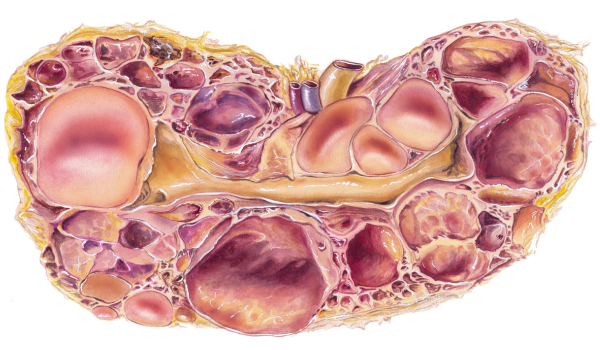
Polycystic kidney disease (PKD) is the most common inherited kidney condition, affecting around 70,000 people in the UK. It causes fluid-filled cysts to grow in the kidneys, which can lead to kidney failure. Other organs like the liver, brain and heart can also be affected.
There is currently no cure. Existing treatments can only help slow cyst growth, or relieve symptoms but not all patients benefit, and can bring challenging side effects.
The most common type is autosomal dominant polycystic kidney disease (ADPKD), caused by changes in the PKD1 or PKD2 genes. It affects all genders and ethnicities equally.
ADPKD is the fourth leading cause of kidney failure. People typically need kidney replacement therapy by age 55, though this can vary widely. It’s usually passed from parent to child, with a 50% chance of inheritance, though it can also occur spontaneously through a new genetic mutation.
Autosomal recessive polycystic kidney disease (ARPKD) is much rarer and often diagnosed in babies or young children. It can be serious and even life-threatening early in life. ARPKD is inherited when both parents are carriers of a faulty gene, even though they don’t have the condition themselves. It affects around 1 in 20,000 births.

Be part of the change
We’re calling on researchers, clinicians, and early-career scientists — from both PKD and other disease areas — to join us in transforming care for people with PKD.
This first round of funding from the PKD Partnership is designed to support high-quality, collaborative science that accelerates discoveries, unlocks new treatments, and offers real hope to families. Researchers whose work aligns with the biological pathways involved in PKD — such as inflammation, healing, fibrosis, or imaging technologies — are encouraged to apply. Applications from early-career researchers and allied health professionals are also welcome.
Key dates
- Open for applications: 11 August 2025
- Deadline: 22 October 2025
Strategic research themes
Proposals should address one or more of the PKD Partnership’s strategic priorities:
- Biomarker and molecular insights
Identify and validate biomarkers to predict disease progression and treatment response. - Preclinical innovation
Advance reliable experimental platforms to accelerate therapeutic discovery. - Integrated data and translational tools
Leverage large-scale data and computational methods to improve outcomes. - Personalised and preventive care strategies
Develop tailored treatments and early interventions.
Collaboration between research centres is strongly encouraged.
PKD Partnership subgroups
The PKD Partnership includes six specialist subgroups, each tackling key areas of research and care to deliver the greatest impact.
Their priorities were set in May 2025 and will continue to evolve to meet the needs of people affected by PKD.
Learn more about the subgroups and their priorities
Types of grants available
Applications are open for a range of research funding opportunities — from pilot grants and PhD studentships to clinical and non-clinical fellowships — supporting both early-stage ideas and larger, ambitious projects aligned with our strategic priorities.
Grants range from £10,000 for early pilot studies to up to £250,000 for major research projects. Additional funding is available for fellowships and studentships.
Visit our application page for full details on funding streams, eligibility and to apply
- Open for applications: 11 August 2025
- Deadline: 22 October 2025
Got a question? Get in touch
- Lesley Woolnough, PKD Partnership lead: [email protected]
- Audrey Hughes, Patient involvement and engagement officer, PKD Charity: [email protected]

ADPKD, ARPKD, Research, Grants awarded, PKD, PKDTreatment
- Hits: 5319