


Helpline

0300 111 1234

Autosomal recessive polycystic kidney disease (ARPKD) in babies

This information is for people with a baby diagnosed with ARPKD before or after birth. It explains how ARPKD might affect your baby and the treatment they might need in their first 2 years of life.

If you have an older child with ARPKD, see our separate web page for ARPKD in children.

We’re sorry if you’re upset by any of the information in this factsheet, but we want to be open with you. We understand that finding out your baby has ARPKD is very worrying. Although ARPKD can be a severe disease, there is hope — many babies survive with specialist care. Please call our helpline on 0300 111 1234 if you’d like to talk to someone about ARPKD.

Key Facts

  • ARPKD is a rare disease that can affect a baby’s kidneys, liver and lungs.
  • Signs of the condition might be spotted before or after your baby is born.
  • If your baby is diagnosed with ARPKD before birth, you’ll be offered regular scans to check on their kidneys and growth.
  • Your pregnancy doctor (obstetrician) will discuss options for the birth with you, which might include giving birth in hospital with a specialist intensive care unit for newborns.
  • The symptoms of ARPKD can vary from baby to baby, even within the same family.
  • Most babies born with ARPKD survive. Sadly, some who are more greatly affected by the condition do not survive.
  • Babies with ARPKD may have breathing problems and large kidneys with reduced function.
  • They might also have high blood pressure, liver changes, difficulty feeding, particular facial features, foot and hip problems, and higher risk of infections.
  • Your baby’s treatment team will monitor them carefully, and treatments are available to help with symptoms.
  • Most often, ARPKD is caused by an altered gene called PKHD1. Less often it’s caused by genes called DZIP1L or CYS1.
  • Towards the end of this web page, we give tips on preparing for your baby’s first years, looking ahead to childhood and adulthood, help coping, practicalities, and loss of a baby.

What is ARPKD?

Autosomal recessive polycystic kidney disease (ARPKD) is a rare disease. It affects about 1 in every 20,000 babies born. It can affect a baby’s kidneys, liver and lungs. Signs of ARPKD are sometimes spotted while a baby is growing in the womb (as a fetus). Other times, ARPKD is not diagnosed until after birth or during childhood or adulthood.

ARPKD affects some babies more than others. In the mildest cases, babies have few or no symptoms. In the most severe cases, babies can die from ARPKD.

ARPKD can’t be cured, but there are many treatments to help with symptoms. A range of support will be available for your baby and you throughout their life.

ARPKD before birth

Some babies show signs of ARPKD while they’re growing in the womb. Signs of the condition that your pregnancy doctor (obstetrician), nurse midwife, or ultrasound technician might spot on pregnancy scans include:

  • large kidneys
  • kidney cysts
  • reduced amounts of amniotic fluid

We explain these below.

Based on the severity of these signs, doctors can let you know how your baby is likely to be affected by ARPKD when they’re born. Sometimes, these signs can change during your pregnancy.

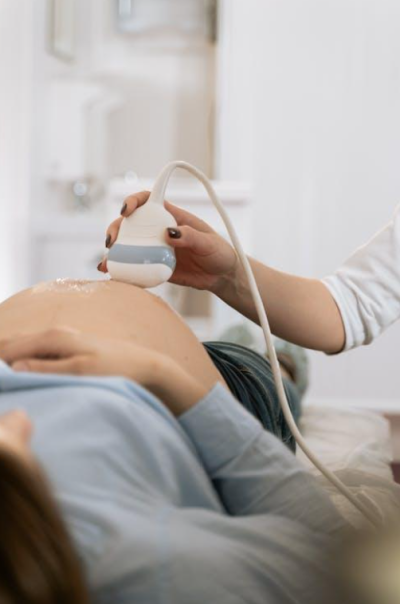
Picture of a woman having a pregnancy scan.

Large kidneys

The first sign of ARPKD is often enlarged kidneys. Your obstetrician, nurse midwife, or ultrasound technician may spot them on your second routine ultrasound scan, which you’ll have around the 20th week of pregnancy. (Your first pregnancy scan, during weeks 8–14, is to estimate your due date. The second, during weeks 18–21, is to check your baby’s health and growth, and the placenta).

Kidney cysts

Cysts are sacs filled with fluid. They can occur in a baby’s kidneys for a number of reasons. When there are many small cysts in both kidneys, it can be a sign of ARPKD.

On a scan, cysts can make the kidneys more visible. Doctors sometimes describe this as the kidneys being ‘echogenic’ or ‘bright’.

Cysts can stop the kidneys working as well as they usually would. This can cause problems for your baby’s development in the womb and after birth. We explain what to expect at birth and during infancy later on this web page.

Assessments and treatments

If your baby is diagnosed with ARPKD before birth, you’ll be offered regular scans (for example every 2 to 3 weeks) to check on their kidneys and growth. This will help your obstetrician and you to plan the care your baby might need after birth.

Reduced amount of amniotic fluid

In the first 4 months or so of pregnancy, the amniotic fluid that surrounds your developing baby (the fetus) is made by your body. When a developing baby’s kidneys start to function, they take over this job.

If your developing baby’s kidneys are badly affected by ARPKD, they won’t produce very much amniotic fluid. This is called ‘oligohydramnios’ and is often seen when ARPKD is diagnosed during pregnancy.

Insufficient amniotic fluid can lead to:

  • lungs that are not fully developed
  • particular facial features
  • club feet (twisted feet)
  • hip problems

Assessments and treatments

Your obstetrician, nurse midwife or ultrasound technician will check the amount of amniotic fluid in your womb during routine pregnancy scans. If there is less fluid than usual, they’ll offer you extra scans. They might recommend you have a steroid injection before birth to help prepare your baby’s lungs. The extra scans will help your obstetrician and you to plan the care your baby may need immediately after birth, such as breathing support.

Tests to confirm ARPKD during pregnancy

ARPKD is not always diagnosed before birth. When it is, your obstetrician can usually make the diagnosis based on how your developing baby’s kidneys look on ultrasound scans.

Some other kidney diseases or a viral infection can cause similar looking problems. If your obstetrician is not sure whether your developing baby has ARPKD, they might offer you a genetic test. These tests are only available when there is a strong chance of a baby having ARPKD (for example, because you and your partner are both carriers of genes that cause the condition).

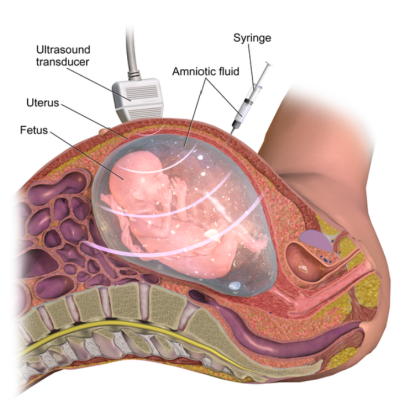
For the genetic test, a sample of your developing baby’s DNA will be collected via a procedure called amniocentesis (see picture below).

An illustration showing the process of amniocentesis, as described in the picture legend.

An alternative way to get a DNA sample from your developing baby is called chorionic villus sampling (CVS). This is similar to amniocentesis but the needle is put through the mother’s abdomen or opening to the womb (cervix) to take a sample of cells from the placenta.

Tommy’s (a pregnancy and baby charity) has information on screening tests in pregnancy, including amniocentesis and CVS.

We explain genetic test results later on this web page.

Deciding whether to continue your pregnancy

ARPKD is not always severe early in life. Most babies born with the condition survive. Although ARPKD can cause a variety of long-term health problems, people with the condition can live long and fruitful lives.

Sadly, if ARPKD causes serious problems before birth, it can greatly reduce a baby’s chances of surviving the first days or weeks of life. If doctors predict that your baby is unlikely to survive, your obstetrician might discuss with you the option to end your pregnancy.

To be given this option is extremely upsetting and you might struggle to take it in.

It’s hard for doctors to predict a baby’s chances of survival because ARPKD is so variable. This can make decisions about termination even harder.

If you’re considering termination, it might help you to:

  • Ask your obstetrician for their opinion on how your baby is likely to be affected by ARPKD at birth and in childhood.
  • Ask for a referral to a kidney specialist for children (paediatric nephrologist) and liver specialist for children (paediatric hepatologist) to get more information.
  • Ask to be referred to a counsellor to talk through the decision and get emotional support.
  • Talk to parents of babies with ARPKD to understand how they manage the condition and how it affects their baby and the family (through our Facebook group for ARPKD support, for example). Be mindful that your baby might be affected by ARPKD differently to other people’s babies.
  • Talk to people who have ended a pregnancy due to a life-limiting diagnosis to hear their experiences.
  • Get support and information from expert charities such as the PKD Charity, who understand ARPKD, and Tommy’s, who provide support during pregnancy.

There are more suggestions for organizations who can provide help and support at the end of this web page.

Planning and giving birth

If your baby is diagnosed with ARPKD before birth, your pregnancy doctor (obstetrician) will discuss plans for the birth with you. Depending on how ARPKD is affecting your developing baby, they might recommend:

  • Giving birth in hospital with a specialist neonatal intensive care unit. This means your baby can receive any extra care they need immediately after birth, such as breathing support and dialysis.
  • Having a caesarean (a ‘c section’), which is an operation to remove your baby from the womb. A caesarean might be safer if your baby has a large tummy (due to enlarged kidneys) that might make a natural birth harder.

    The Tommy’s website has information on having and recovering from a caesarean.

    Before the birth, your obstetrician will talk to you about your preferences for how much medical support your baby will have.

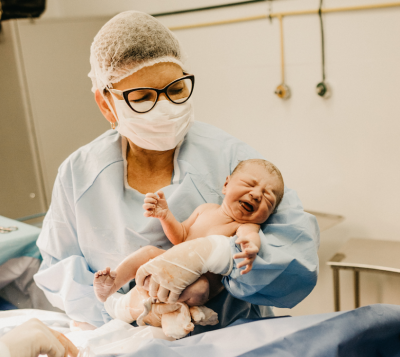
    Picture of a nurse holding a baby born by caesarean.

    After birth and during infancy

    You might know that your baby has ARPKD before they’re born, but sometimes there are no signs until after birth.

    Doctors can usually confirm whether a baby has ARPKD using a scan of the kidneys and liver. However, some other diseases can cause cysts in the kidneys too. If your doctor is not certain whether your baby has ARPKD, they might suggest a genetic test to check. We explain genetic test results later on this web page.

    Health problems that can occur in babies with ARPKD include:

    • lungs that are not fully developed
    • large kidneys with reduced function
    • high blood pressure
    • low sodium levels
    • liver changes
    • difficulty feeding
    • particular facial features, foot and hip problems
    • infections

    We discuss each of these below.

    Not all babies with ARPKD will have these problems. In general, babies diagnosed after birth usually don’t need much medical support in their first year. They’ll have checkups because they’re likely to develop more problems over time. Babies diagnosed before birth are likely to need more medical care and closer monitoring.

    Lungs that are not fully developed

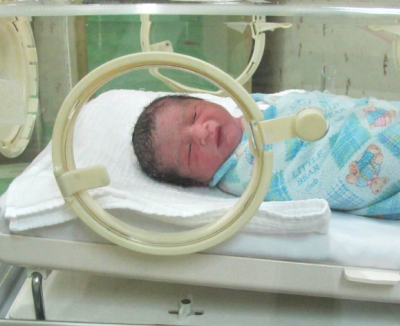
    About 4 in every 10 babies born with ARPKD have under-developed lungs. This means their lungs are not yet ready to do their job. Babies with under-developed lungs struggle to breathe, which is called respiratory distress syndrome. To help, these newborns are given breathing support from a machine called a ventilator. In milder cases, an incubator (see picture) may be sufficient.

    Picture of a newborn baby in an incubator.

    Babies with ARPKD can also struggle to breathe if they have enlarged kidneys that push on their breathing muscles. Some babies are born with a collapsed lung, which makes breathing harder too.

    Babies needing ventilation support receive this in specialist neonatal units. Bliss (a charity for babies born premature or sick) explains the different types of neonatal units in the NHS and the equipment you may see.

    Ventilation saves the lives of about 7 or 8 in every 10 babies with under-developed lungs due to ARPKD. These babies will grow stronger lungs over time and are very likely to reach adulthood.

    Sadly, some babies’ lungs are too weak to support them, despite ventilation. These babies do not survive past the first days or weeks of life.

    Assessments and treatments

    Doctors (neonatologists) and nurses will use monitors to check your baby’s lungs are getting enough oxygen into their body. If not, they’ll put your baby in an incubator or on a ventilator to support their breathing. Babies in neonatal units are monitored closely. The neonatal unit may also have a counsellor, psychologist, or psychotherapist to support you.

    Kidney changes

    In healthy babies, the kidneys:

    • filter waste products from the blood into urine
    • balance the amount of water, salt and minerals in the blood
    • boost the production of red blood cells (which carry oxygen)
    • help control blood pressure
    • keep bones healthy.

    Most babies with ARPKD have functioning kidneys, which means their kidneys can do these jobs. They might develop problems as they grow up, but not yet. Other babies with ARPKD are born with poorly functioning kidneys.

    If your baby’s kidneys stop working, they’ll need dialysis to survive. Dialysis replaces some of the work the kidneys should do. InfoKID (a charity for children with kidney diseases) has information on dialysis in children.

    1 in every 3 babies born with reduced kidney function due to ARPKD will need dialysis in their first year. In very severe cases, babies need dialysis soon after birth.

    Picture of woman holding her baby in the park.

    Assessments and treatments

    A doctor specializing in kidney problems in children (a paediatric nephrologist) will use blood and urine tests to check how well your baby’s kidneys are working. They will do these checks regularly.

    If your baby’s kidney function is very low, they’ll need dialysis to survive. Peritoneal dialysis uses fluid placed in your baby’s abdomen. This is the way dialysis is usually given to babies with ARPKD. Alternatively, haemodialysis uses a machine to filter your baby’s blood.

    If your baby has low levels of red blood cells (anaemia), this can make them tired. Iron supplements can help. Another treatment for anaemia is an erythropoietin-stimulating agent. This is a medicine that encourages your baby’s body to make more red blood cells.

    If your baby has very large kidneys that are pushing on other organs and causing problems, your kidney specialist might recommend one or both kidneys are removed. This surgery is called nephrectomy.

    High blood pressure

    Many babies with ARPKD have high blood pressure (hypertension). This can often be controlled or lessened with medication.

    Assessments and treatments

    Your baby will have blood pressure checks. If their blood pressure is high, blood pressure medicines can help. High blood pressure caused by ARPKD can be hard to control so your baby might need more than one medicine.

    Low sodium levels

    Many babies with ARPKD have low sodium levels in their blood. The medical term for this is hyponatraemia. It occurs due to changes in the way the kidneys filter the blood.

    Assessments and treatments

    If your baby has low sodium levels, this can be helped by reducing the amount of fluid they drink and changing the foods they eat. Your kidney specialist or a dietitian will explain what to do.

    Changes in the liver

    ARPKD causes changes to the liver over time. These liver problems are sometimes called congenital hepatic fibrosis (CHF) and Caroli disease.

    Although newborns with ARPKD may have some cysts and scar tissue in their liver, problems with the liver don’t usually start until later in childhood or adulthood.

    Assessments and treatments

    Your doctor will use a blood test to check how well your baby’s liver is working. They’ll also do a physical exam (looking and feeling for changes).

    Your baby might also have an ultrasound scan of their liver. However, sometimes this scan is done later in childhood.

    Feeding problems

    Some babies with ARPKD have difficulty feeding. For example, they might stop nursing or eating after only taking in a little milk or food.

    This can happen if your baby has very large kidneys that press on their stomach and gut. This can make your baby feel less hungry or feel full earlier.

    ARPKD can also make babies more tired and can affect how well food moves through their gut.

    If your baby isn’t feeding well, they’re more likely to get dehydrated and might not get the nutrition they need. Help is on hand.

    Picture of a father feeding his baby in a highchair.

    Assessments and treatments

    Your baby’s kidney specialist or dietitian will provide advice and feeding help. They’ll check your baby’s growth too.

    If your baby isn’t feeding well, they might need fluids, food supplements or high-calorie feeds.

    Some babies need to have feeds through a small tube passed through their nose into their stomach (a nasogastric tube). A tube that goes directly to their stomach through their abdominal skin (a gastrostomy) is another option. This involves a small operation to place the tube.

    If the problem stems from your baby’s kidneys being very large, your doctor might suggest surgery to remove one or both kidneys. This is called nephrectomy and will make more room for their stomach.

    Particular facial features, club feet and hip problems

    If there was not much amniotic fluid in your womb during pregnancy, this would have given your baby less cushioning and room to grow. We explained why this can happen in the Reduced amount of amniotic fluid section earlier. 

    This usually only happens when ARPKD severely affects a developing baby’s kidneys.

    Very low levels of amniotic fluid can lead to features such as:

    • a flattened nose
    • set-back chin
    • skin folds in the corners of the eyes
    • low ears
    • club feet (twisted feet)
    • hip problems

    These features are sometimes called ‘Potter’s syndrome’.

    Babies with these changes usually have under-developed lungs and poorly functioning kidneys too, which we cover above. Sadly, many babies with Potter’s syndrome do not survive.

    Assessments and treatments

    Babies with Potter’s syndrome tend to need a lot of medical support after birth due to their under-developed lungs. Being in a hospital with a specialist neonatal unit after birth means the right care is on hand. Your newborn specialist (neonatologist) and other specialists will use blood tests, scans and other tests to check your baby’s health. They’ll aim to give your baby the very best chances of survival. The neonatal unit may also have a counsellor, psychologist or psychotherapist to support you.

    Infections

    If your baby has changes to their lungs, kidneys and liver due to ARPKD, they might be more likely to get infections.

    Signs of an infection can include:

    • crying constantly or differently
    • a high temperature (38°C or more) or low temperature (36°C or below)
    • rapid or noisy breathing
    • being much sleepier than usual
    • blood in their wee

    If your baby has signs of infection, see a doctor promptly. If they have an infection, they’ll need a course of antibiotics to clear it.

    Why some babies have ARPKD

    You did not do anything wrong in your pregnancy to cause your baby to have ARPKD. The condition is caused by an altered (faulty) gene.

    ARPKD occurs when a baby has two copies of a gene that causes ARPKD. Most often the altered gene is PKHD1. Less often children have an altered gene called DZIP1L or CYS1. Most babies with ARPKD inherited an altered gene from each parent.

    Occasionally only one parent has an altered gene, and the second alteration happens by chance.

    As PKHD1 is the more common gene linked to ARPKD, we use it to explain ARPKD inheritance below.

    PKHD1 gene inheritance

    We all have 2 copies of the PKHD1 gene. This gene is for a large protein called fibrocystin that is found on cells that line the kidney and liver ducts. The reason that altered PKHD1 genes cause ARPKD is not fully understood.

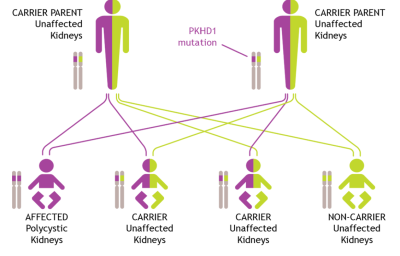
    A baby needs to inherit 2 altered PKHD1 genes to get ARPKD:

    • 2 altered PKHD1 genes = ARPKD
    • 1 altered PKHD1 gene and one normal copy = healthy carrier
    • 2 normal copies of the PKHD1 gene = healthy and not a carrier.

    This pattern of inheritance is called ‘autosomal recessive’. It’s shown in the picture below.

    Carriers have no symptoms and usually don’t know they have the gene unless they or someone else in the family has had a baby with ARPKD before. About one in every 70 people in the UK is an ARPKD carrier.

    When two carriers have a baby, the chance of their baby having ARPKD is 1 in 4 (25%). There is also a 2 in 4 (50%) chance of their baby being a carrier. This chance is the same for each child the couple has.

    A diagram showing how ARPKD genes can be inherited, as we explain in the text above.

    Tests for ARPKD in family members

    If your baby has been diagnosed with ARPKD (or is showing signs of the condition), doctors may offer tests to:

    • both parents
    • any other children you have together.

    This is to check whether anyone else in your family has ARPKD. 

    Genetic testing

    Genetic testing can check for the altered genes that cause ARPKD. It can also show whether a person is a carrier. A carrier is a person who does not have ARPKD but can pass on a gene causing the condition to a child. 

    Knowing you’re a carrier can be useful for planning a family. When 2 carriers want to have a baby together, they might be able to have a special type of in vitro fertilization (IVF) where an embryo without ARPKD is selected. This is called preimplantation genetic testing.

    Ultrasound scans

    An alternative to having a genetic test for ARPKD is an ultrasound scan to check for signs of the condition in the kidneys and liver.

    It’s your choice whether to have a genetic test, scan, or neither, for yourself and your children. Ask your doctor to explain the pros and cons.  

    For more information, see our web page Genetic counselling and testing in ARPKD.

    Preparing for your baby’s first years

    Picture of father holding a toddler on his shoulders.

    It’s hard to predict how your baby’s first 2 years of life might be because ARPKD is more severe in some babies than others. Your doctor will be able to explain what care your baby might need at home and at hospital.

    Babies with few or no ARPKD symptoms still need check-ups. So, you’ll probably need to visit the doctor’s surgery or hospital a little more often than usual.

    Babies who are more severely affected by ARPKD may need:

    • to stay in hospital after birth
    • more regular check-ups
    • to visit or stay in hospital multiple times for procedures and treatments
    • additional care at home

    Things you can do to help yourself prepare include:

    • Ask doctors to explain what your baby’s health needs are likely to be in the coming months and years.
    • Depending on your baby’s needs, consider your maternity/paternity plans and talk to your employer about the flexibility you may need.
    • Accept practical and emotional help from friends and family members.
    • Plan for the possibility that you may need to spend time in hospital with your baby — who will care for other family members and pets, for example?
    • Look into options for where you can get expert care for your baby. The UK Kidney Association has a list of children’s kidney units in the UK.
    • Get support and information from expert charities such as The PKD Charity, who understand ARPKD, and Bliss, who support families with premature or sick babies.
    • Talk to parents of babies with ARPKD (through our Facebook group for ARPKD support, for example). Be mindful that your baby might be affected by ARPKD differently to other people’s.

    There are more suggestions for places to get help and support at the end of this web page.

    Picture of a toddler in a pushchair.

    Looking ahead to childhood and adulthood

    Life expectancy

    Most babies with ARPKD who survive their first month of life will survive through childhood too. Research studies tracking the progress of babies with ARPKD have only been running for 10—20 years, so we don’t have accurate facts on average life expectancy beyond that. There are a growing number of adults living with ARPKD across the world.

    Health

    Many children and adults living with ARPKD face big health challenges during their lives and need specialist treatment. ARPKD causes more damage to the kidneys and liver over time. The amount it affects these organs differs from child to child.

    Many children with ARPKD (especially those diagnosed as babies) have kidney problems. Although the kidneys grow bigger over time, an enlarged abdomen tends to be less noticeable during childhood than in babies.

    Some children have no or only mild kidney disease. By age 10, about 3 in every 10 children with ARPKD reach kidney failure.23 This means they need dialysis or a kidney transplant to survive. Children can usually have a kidney transplant from about age 2 years onwards.

    As ARPKD kidneys produce more wee than usual, your child is likely to wet the bed. They’re also likely to get thirsty and dehydrated more easily than other children. Kidney problems often lead to high blood pressure, which is treated with medicines.

    Under half of all children with ARPKD have symptoms related to liver changes. By age 10, about 1 in 10 children with ARPKD have a liver transplant.

    Many children with ARPKD have problems gaining weight and growing. Food supplements and growth hormones can help. In addition, ARPKD can affect mental health and learning. This means your child might need extra psychological, social, and school support as they grow up.

    To learn more about what to expect in childhood, see our factsheet Autosomal recessive polycystic kidney disease (ARPKD) in childhood and adolescence.

    Help coping

    Finding out during or after pregnancy that your baby has a condition that could affect their survival and future health is a shock. When doctors can’t fully predict how your child will be affected, this can make the news even more difficult to process.

    Your emotions might change quickly. For example, you might feel in control one day but overwhelmed the next.

    Tips for coping include:

    • Give yourself and your family time to process new information.
    • Talk openly to others about how you’re feeling.
    • Accept help from friends and family.
    • Tell people what you need.
    • Set aside time to look after yourself and do things you enjoy.
    • Do research into the disease at your own speed.
    • Focus on the facts you have now.
    • Let people know if you’re not ready to talk about certain topics.
    • Seek support from expert charities and other families.
    • See a counsellor to help you identify your feelings and manage them in practical ways.
    • If anxiety, depression or other mental health issues are affecting your daily life, talk to your GP.

    Our helpline is open for information and support (details below). We also have a Facebook support group for families affected by ARPKD.

    PKD Charity Helpline

    Our confidential helpline is available 9.30am to 5.00pm, Monday to Friday except bank holidays:

    Additional charities who provide useful support are listed at the end of this web page.

    Practical tips

    Getting the best care for your baby

    If your doctor is referring your baby to a specialist, you usually have a right to choose the hospital or service they’ll go to. You need to make this choice before the referral is made.

    Things to research or ask your doctor are:

    • What options are there for where your baby could be referred?
    • Which places have the most experience in treating babies with ARPKD?
    • How long will you need to wait for an appointment?
    • How far is the hospital or service?
    • How easy is it to get to?

    If you want to swap to a different hospital or consultant after referral, the NHS might be able to help. However, this isn’t your legal right. Talk to your current specialist or doctor. Give your reasons for wanting to swap and ask how you can do this.

    Travel insurance

    If you want to go abroad, it’s a good idea to get travel insurance for your family. This may cost you more than usual because your baby has a health condition. Give yourself plenty of time to look into options.

    For advice and a list of insurance companies used by other people with kidney disease, see Kidney Care UK.

    Financial and practical help

    If your baby needs a lot of extra care, you might be able to get financial support:

      • Disability living allowance: Families of babies who need a lot of extra care may be able to claim a disability living allowance. See Gov.uk.
      • Carers allowance: If your child is eligible for disability living allowance and you care for them for more than 35 hours a week, you may be able to claim a carer’s allowance. See Gov.uk.
      • Other government benefits: Some families might be eligible for additional benefits or help. See the Well Child website.
    • Grants from organizations:
      • The Well Child website lists some organizations who offer grants (financial help) to families of children with serious conditions. These grants might be for special equipment, therapies and respite care, for example. Respite care is when other people provide some care for your child to give you a break.
      • Kidney Care UK also provides grants for families of people on dialysis or who have had a transplant if they can’t pay their bills and other costs.

    Loss of a baby

    Heartbreakingly, some families affected by ARPKD experience the loss of a pregnancy or baby. This is an extremely difficult time for the whole family.

    You may find it helpful to connect with other people who have lost a baby to ARPKD, for example through our Facebook support group for families affected by ARPKD. However, this group also has families sharing stories of their child’s survival, which you might find upsetting.

    Expert charities who provide information and support to families who have lost a baby include Tommy’s and Bliss. Reach out to them for help.

    Picture of two adults holding hands.

    Information and support from others

    The organizations listed here can offer help and advice:

    • Tommy’s supports parents during pregnancy, including those with a sick baby, who have lost a baby, or who are considering ending a pregnancy. Their website also has information on screening tests before pregnancy and a caesarean birth.
    • Bliss offers advice and support for parents of premature and sick babies.
    • The British Pregnancy Advisory Service offers support to people who are considering ending a pregnancy, including for medical reasons.
    • InfoKID provides information to parents and carers of babies and children with kidney conditions, including about dialysis and transplant.
    • Well Child gives seriously ill children the chance to thrive at home.
    • The Rainbow Trust supports parents and siblings of children who are seriously ill.
    • The Genetic Alliance UK provides information and support to people affected by a genetic disorder.
    • MIND provides information and support to people with mental health problems.
    • Kidney Care UK provides information and support to kidney patients and their families.
    • The Children’s Liver Disease Foundation provides information and support for families of children with liver diseases.
    • Kidney Kids Scotland provides support for families of babies and children with kidney diseases in Scotland.
    • Kidney Wales provides support for people with kidney diseases in Wales.
    • Children’s Kidney Fund N.I. helps families of children with kidney diseases in practical ways in Northern Ireland.
    • Carers UK offers information and support for people acting as carers in the UK, as well as ways to connect with others.
    • The NHS provides general health information, including on neonatal care and signs your baby is unwell.

      Disclaimer regarding imagery

      All photography appearing on this web page is for illustrative purposes only and is freely available via Pexels. The medical history of persons shown is unknown.

      Further information

      All of our publications are based on references but these are removed for ease of reading on our webpages. A version of this webpage with references included is available upon request by emailing [email protected]

      Authors and contributors

      Written by Hannah Bridges, PhD, independent medical writer, HB Health Comms Limited. Expert review by Professor Manish Sinha, Consultant Paediatric Nephrologist, Guy’s and St Thomas’ NHS Foundation Trust.

      With thanks to all those affected by ARPKD who contributed to this publication.

      Ref no: ARPKD.PB.V1.0

      © May 2025.

      First published: May 2025.

      Due to be medically reviewed: May 2028.

      Disclaimer: This information is primarily for people in the UK. We have made every effort to ensure that the information we provide is correct and up to date. However, it is not a substitute for professional medical advice or a medical examination. We do not promote or recommend any treatment. We do not accept liability for any errors or omissions. Medical information, the law and government regulations change rapidly, so always consult your GP, pharmacist or other medical professional if you have any concerns or before starting any new treatment.

      If you don't have access to a printer and would like a printed version of this information sheet, or any other PKD Charity information, call the PKD Charity Helpline on 0300 111 1234 (weekdays, 9am–5pm) or email [email protected]

      The PKD Charity Helpline offers confidential support and information to anyone affected by PKD, including family, friends, carers, newly diagnosed or those who have lived with the condition for many years.

      Feedback

      We welcome feedback on the information provided on this webpage. If you have any feedback regarding the information provided on this webpage, please complete the Feedback Form