
Could gene therapy help children with ARPKD in the future?
Summary
Gene therapy is a new way to treat diseases caused by changes in our genes. It works by giving cells new instructions to make the faulty gene work better.
Gene therapy for PKD is still at an early stage. In the future, it may be able to help people with Autosomal Recessive Polycystic Kidney Disease (ARPKD), a rare and severe form of PKD.
This week, we're sharing the second of five projects funded by the PKD Partnership. The project is looking at gene therapy for children with PKD. There are very few medicines for rare kidney diseases in children. This research aims to help change that.
Dr Jennifer Chandler and her team at Great Ormond Street's research institute have been given £98,000 for this research. They will test a type of gene therapy in human kidney cells grown in a lab. The team is based at the University College London Great Ormond Street Institute of Child Health.
This is an early study. The team will look at how the kidney cells respond to the therapy. It will not lead directly to a new treatment, but what the researchers learn could help shape future research.
Dr Chandler said:
"Children with rare kidney diseases have waited far too long for treatments designed specifically for them. Our ambition is to help change that by developing therapies tailored to childhood conditions, rather than relying on treatments that were originally developed for adults. Thanks to funding from Kidney Research UK, we're testing a new approach for childhood polycystic kidney disease in human kidney cells. We hope this research will lay the foundations for more effective treatments and, ultimately, improve the lives of children living with this devastating condition and their families."
Read more below.
What is this research looking at?
ARPKD is a rare inherited condition that can affect children from birth or early childhood. It is caused by changes in a gene. These changes affect an important protein that helps the kidneys work properly. When this protein does not work properly, large fluid-filled sacs, called cysts can develop and grow.
Dr Chandler's team is testing a gene therapy designed to give kidney cells a new set of instructions. These instructions tell the cells how to make a version of the protein that works. The researchers want to find out whether this can help kidney cells behave more normally. They will also look at whether it can reduce the formation of cysts.
This is an early laboratory study. The researchers first need to understand whether this approach works in human kidney cells grown in the laboratory. If the results are encouraging, the research could help guide future studies.
How will the team do the research?
The researchers will use a virus to deliver the new set of instructions into kidney cells. The virus has been changed so that it cannot cause disease. Instead, it acts as a delivery system for the therapy. The kidney cells can then use these instructions to make a version of the protein that works.
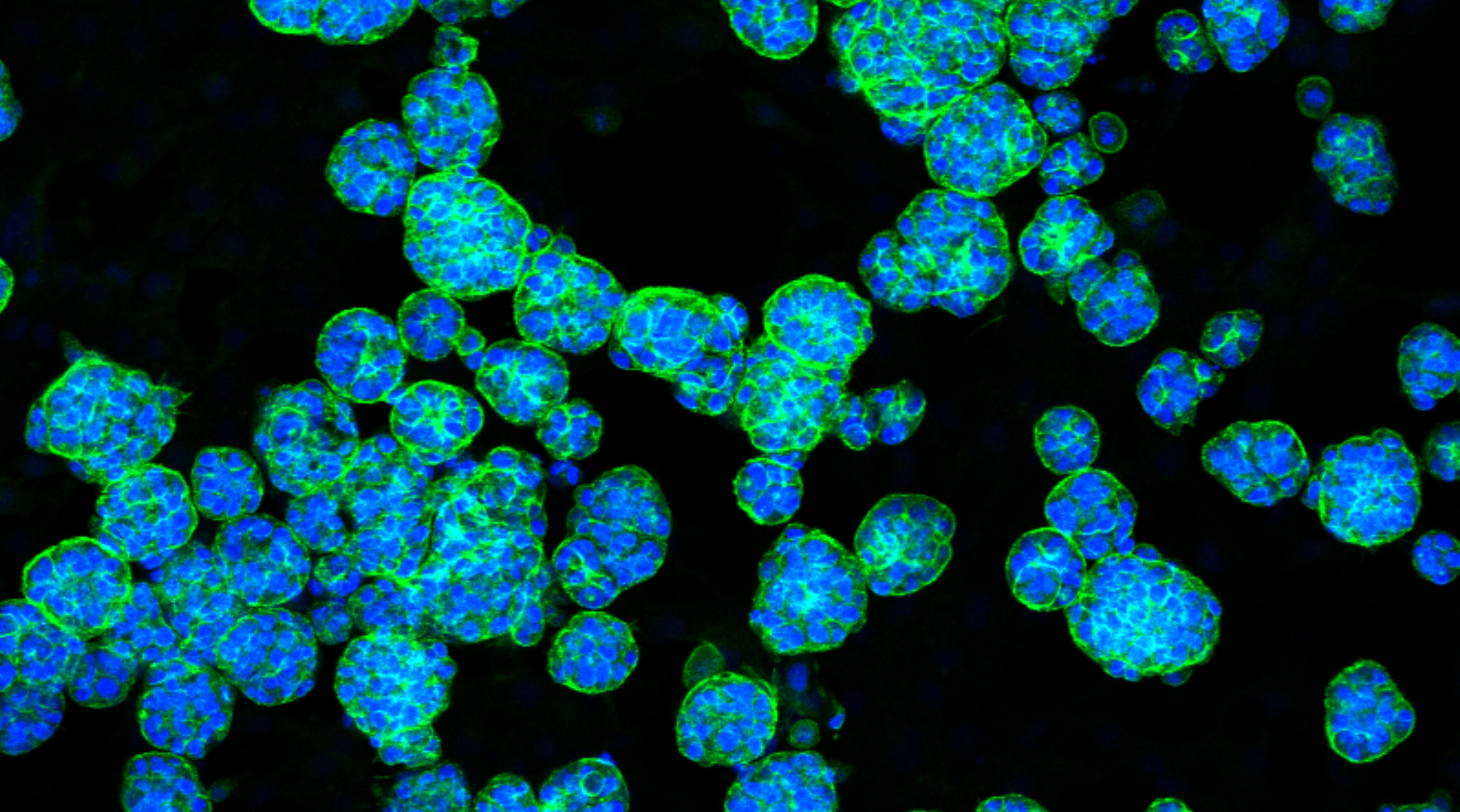
The team will test this approach in human kidney cells grown in the laboratory. The image at the top of this article is provided by Dr Chandler and is an example of the human kidney cells growing in 3D in a dish.
Says Dr Chandler, "These kidney cells form spheroid structures that resemble cysts. We stain them with fluorescent dyes so we can calculate their size. This is the model that will be used in this work, to assess if our gene therapy can reduce the size of these structures."
The researchers will look at whether the new set of instructions helps reduce or slow the formation of cysts. This work will help the team to understand whether the approach is promising enough to study further.
How could this help people with PKD?
Gene therapy has already been approved for some rare genetic conditions. Researchers hope it could also help guide the development of future treatments for ARPKD.
Developing new treatments takes time. This is not a treatment being tested in children. But studies like this are often the first step. If the results are encouraging, the study could help researchers develop future treatments for children with ARPKD. It may also increase our understanding of how ARPKD develops.
"This research is an important first step in understanding whether this new therapeutic approach could slow the progression of ARPKD. More broadly, we hope this project helps address the gap in research for rare childhood kidney diseases and informs the development of new therapies for a range of kidney conditions in the future." Dr Jennifer Chandler.
For more information on Autosomal Recessive PKD click here.
- Hits: 778