

First Tess Harris Fellowship awarded to advance PKD research
From genetic research to personalised care for people with polycystic kidney disease (PKD)
Dr Christopher Pieri from University College London (UCL) has been awarded the first Tess Harris Fellowship, a £350,000 research award delivered through the PKD Partnership — a collaboration between Kidney Research UK and the PKD Charity.
This project will help us to better predict how PKD develops in each individual and identify patients who may need earlier or more personalised care by using large-scale genetic and clinical data.
The fellowship was created in memory of Tess Harris, former CEO of the PKD Charity and a passionate advocate for research and better understanding of PKD.
Tackling the uncertainty of PKD
Polycystic kidney disease (PKD) is the most common inherited cause of kidney failure. It affects around 70,000 people across the UK, and many will go on to need dialysis or a kidney transplant.
For families, the impact goes beyond the diagnosis itself. Even when PKD is confirmed, uncertainty often remains about what the future might hold. People want to know what the condition means for them and their family; how quickly it may progress, how closely they should be monitored, and whether earlier treatment could make a difference.
There is an urgent need to turn better understanding of genetics into clearer, more personalised care.
Dr Pieri explains: “As a renal registrar in North London, I’m drawn to kidney medicine because of the long-term relationships with patients. In PKD, I often hear how much uncertainty families live with about what the future may hold. I want to help change that by improving support throughout their journey and building on the research and progress already underway.”

Building the UK’s largest PKD dataset
Dr Pieri and the team at UCL are creating the most comprehensive UK dataset on PKD to date, bringing together genetic and clinical data from multiple sources. This includes participants from national research studies, as well as around 2,000 patients identified through NHS testing.
This data will be securely linked with the National Registry of Rare Kidney Diseases (RaDaR), which includes long-term clinical information such as kidney scans and blood tests, to build a picture of how the disease progresses in each person.
Dr Pieri says: “With funding from Kidney Research UK and the PKD Charity, we hope turn national research study insights into practical tools for patients to receive faster, more personalised care plans.”
Linking genes to real-world disease progression
The study will compare the genetic code from people with and without PKD to identify which differences drive disease. Researchers will then link genetic findings with clinical measures like kidney function and growth rates to understand why some patients decline faster than others.
“The power of what we can do with data is growing every year” adds Dr Pieri, “We plan to identify which genetic changes cause the most kidney damage so that we can move to treatment that is proactive, rather than reactive for these patients.”
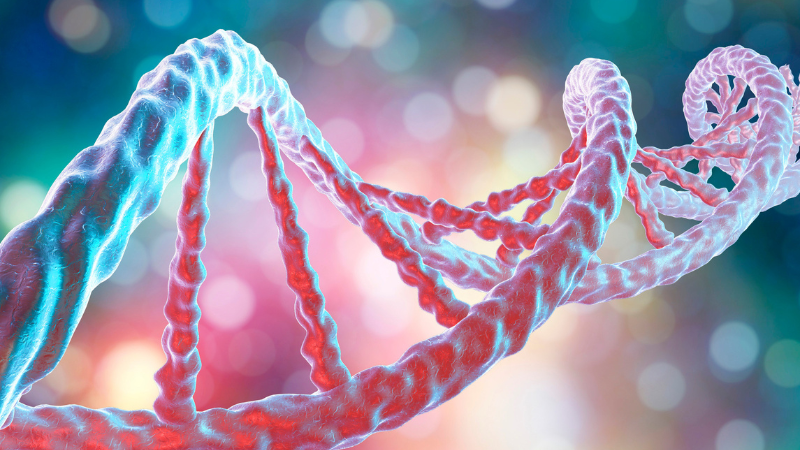
What is our genetic code and why does it matter in conditions like PKD?
The genetic code is an instruction book for the body, written in a long string of chemicals (DNA). These instructions form the basis of how our cells and organs develop and function.
We all have small differences in some of the letters that make up our DNA. Some of these differences can increase the risk of inherited disease like PKD.
In this study, researchers will compare the genetic code of around 2,000 people with PKD and about 25,000 people without it to find out which differences are linked to the disease and which are not. They will also search for larger missing or extra sections of DNA to better understand the full range of genetic factors involved in PKD.
In addition, by looking more closely within the PKD group, researchers hope to identify genetic markers linked to faster cyst growth, quicker loss of kidney function, and differences in how severely the disease progresses between individuals.
What could this research mean for patients and families with PKD?
This study could provide quicker, clearer information for families affected by PKD, supporting a more personalised approach to patient care, such as when to start treatment.
In the longer term, it could also shape national guidance on testing and follow-up and may help guide the development of new treatments to slow or prevent kidney damage.
“By bringing together genetic information and clinical data at this scale, this work will help earlier detection of PKD and support more personalised care for people living with this condition. It will also strengthen our understanding of how genetic factors influence disease progression, helping to identify where treatments can make the greatest difference.” Dr Samantha Lawes, Director of Research Development and Partnerships.
“We are proud to fund this work as the inaugural Tess Harris Fellowship in partnership with Kidney Research UK. It reflects our commitment to supporting important and impactful research that can make a real difference for families affected by PKD. This really resonates with what we see in the PKD community, where uncertainty is huge for the whole family. We hope it will lead to clearer answers earlier and reduce that burden,” said Alison Taylor, Chief Executive Officer at the PKD Charity.
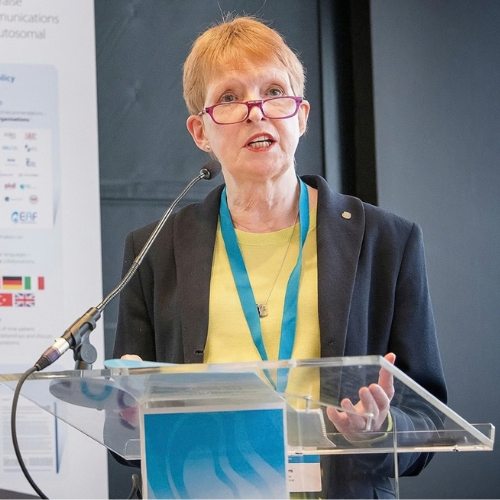
Remembering Tess
Tess was a tireless advocate for Polycystic Kidney Disease (PKD) in her roles as trustee and CEO for the PKD charity and President of PKD International. She drove PKD research towards effective treatments by fostering collaborations between scientists, clinicians and patients.
Tess had her own experience of living with PKD, including peritoneal dialysis and a kidney transplant, as well as losing her father and sister, Justina, to the disease.
Beyond her extensive work, she is remembered by those who knew her, for her warmth, empathy and boundless optimism.
The Tess Harris Fellowship was created in her honour to support research that could make a real difference to people and families affected by PKD.
Tess’s family said:
“Tess would have been so excited to have been involved in this project. She was passionate about the immense importance of continuing research, knowledge and understanding.
In her humility, she would never have imagined a fellowship in her name, so we are incredibly proud as a family to see this continue on her behalf.”
We hope to fund more fellowships in Tess’s name and support the next generation of researchers working towards better treatments and care for people affected by PKD.
Thank you to everyone who has supported and donated to the Tess Harris Fellowship Fund and helped make this award possible.
- Hits: 176