

Could a parent's diet be linked to PKD severity in their child? An early laboratory study gets underway.
This week, we're sharing another project funded through the PKD Partnership, a collaboration between Kidney Research UK and the PKD Charity to speed up progress in PKD research.
PKD is caused by changes in genes that can be passed from parent to child. PKD affects people in different ways. Some people's kidneys fail early in life, while others stay healthy for much longer.
Researchers know that different gene changes can affect how severe PKD becomes in people who inherit the condition. They also want to find out whether diet can make a difference. Professor David Long and his team at University College London Great Ormond Street Institute of Child Health have been given £126,000 to study this issue. The funding will support a PhD student.
This study will look at whether the diet of both parents before pregnancy and the mother's diet during pregnancy may influence how PKD develops in the embryo, and how severe the disease becomes later in life. This is an early-stage study being carried out in laboratory models, and not in people.
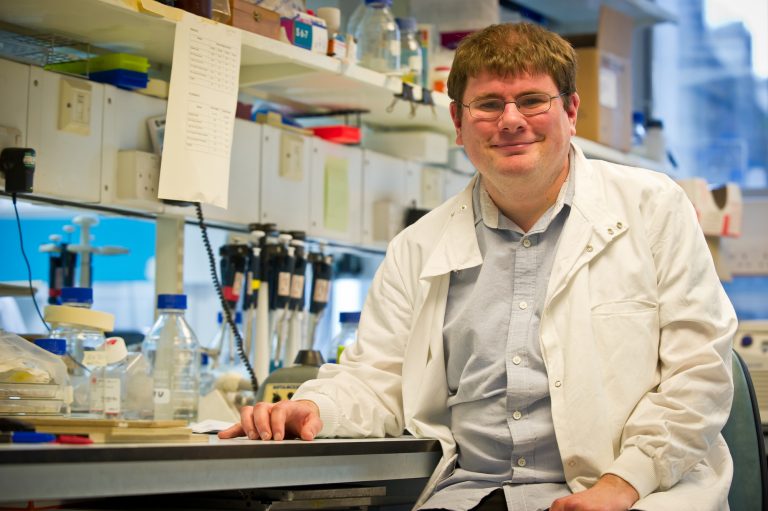
Professor Long said: "Early research in our laboratory suggests that a parent's diet before and during pregnancy may affect how severe PKD becomes in their children. We want to better understand why this happens and what is going on inside the developing kidney. We hope this research will help us understand more about why PKD affects people differently."
Read more below.
How will the PhD student do the research?
The PhD student will work with Professor Long's team. The team will study whether a parent's diet before and during pregnancy may influence how kidneys grow and how cysts form. The team will use miniature kidneys grown in the laboratory (called organoids). They will study how different amounts of fat in the diet may play a role in kidney development and cyst formation. The team will also look closely at the kidney cells to find out whether, and how, fat in the diet affects the cells.
How could this help people with PKD?
If the team finds that a parent's diet before and during pregnancy might influence how severe PKD becomes, it could lead to more research in this area. In the future, it could also provide clearer advice about diet for families affected by PKD who are planning to have children. The project will also help train a new kidney researcher, supporting the next generation of PKD researchers.
Professor Long added: "We are investigating whether diet, something that can be changed, could become an important target for prevention in PKD. In the future, this could help families affected by PKD make informed decisions when planning to have children. We hope this research will lead to new ways to improve the lives of people affected by PKD."
Research, Grants awarded, PKD Partnership
- Hits: 848