
John’s PKD Story: A Life with Giant Kidneys
Imagine carrying kidneys 40 times the size of normal ones.
Meet John, 67, from Manchester — a father of two who’s overcome life with huge PKD kidneys to outlive his expectations, embrace treatment advances, and stay active in both family life and kidney advocacy.
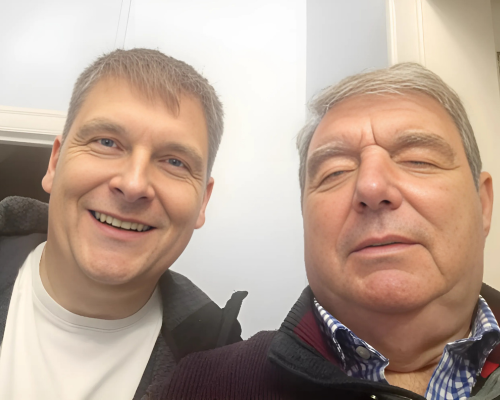
A Shock Diagnosis in the Family
“When I was born, the world was still black and white. Ultrasound hadn’t yet become common in the UK — it would be another ten years or so before it did. DNA wouldn’t even be identified for another three decades.
My birth was unremarkable; nobody could have guessed there was a mutation quietly sitting in my genes. I had a normal upbringing, left school and joined the military. I’d already met the love of my life by then, and during my time in the service, we got married. We went on to have two children — first a girl, then a boy.
When our son was 13, he started getting terrible migraines. So bad, in fact, that he was admitted to Pendlebury Children’s Hospital. After some investigations, it turned out the headaches were caused by something we’d never even heard of: Autosomal Dominant Polycystic Kidney Disease — PKD.
Because it's genetic, both Linda and I were scanned at the children's hospital, then the rest of the family too. It turned out I also had PKD. I remember wondering: “If my son was diagnosed first, does that mean he’s had it longer than me?” Of course, now I know that everyone with PKD has it from conception, but it might not show up or be detectable until later in life.
It was 1995 when we were diagnosed. I came home, fired up the PC — no broadband, no Google back then — and searched ‘Autosomal Dominant Polycystic Kidney Disease’. That first search frightened me. I’d already outlived the life expectancy it mentioned.
Dialysis, Setbacks and a Life-Changing Gift
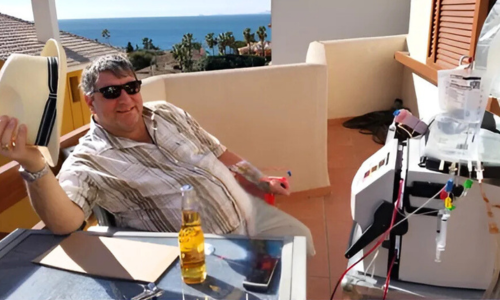
Things carried on until 2014, when I started dialysis. My kidneys had grown to such a size that peritoneal dialysis wasn’t an option. I went with home dialysis using the NXStage machine, mainly because it’s portable.
I used to take it on holiday — after all, she worked hard and deserved a bit of sun. The support I got from the hospital and NXStage was first rate.
In 2018, things got worse. I developed calciphylaxis — a rare, life-threatening condition where calcium builds up in the small blood vessels. It causes painful ulcers and infections.
My legs were in a terrible state, and the doctors even discussed amputation. I wasn’t ready for that. I held out, and after three long months of treatment, it cleared. I still have my dancing legs to this day!
Then, just before Christmas 2018, came one of the most emotional moments of my life. Our daughter came to visit, like she often does, and said, “Dad, I’m fed up seeing you ill. I’ve registered as your donor, we’re a match, and we’ve got an appointment with a transplant surgeon.”
She’s a teacher, and she even arranged for the transplant to happen on the first day of the summer holidays, so she didn’t miss a day of work.
Before I could have the transplant, I had to have my left kidney removed to make space. When they took it out, it weighed 6.3 kg. A normal male kidney weighs around 125 to 170 grams. So mine was roughly the size of a rugby ball and weighed about the same as a sack of potatoes. My right kidney was removed six months after the transplant. They were so massive that I even had a model made of one — as a reminder of… well, everything I’d been through.
Image Warning: The following link shows a real photo of John’s removed PKD kidney. It may be graphic or distressing for some viewers.
👉 View the image at your discretion
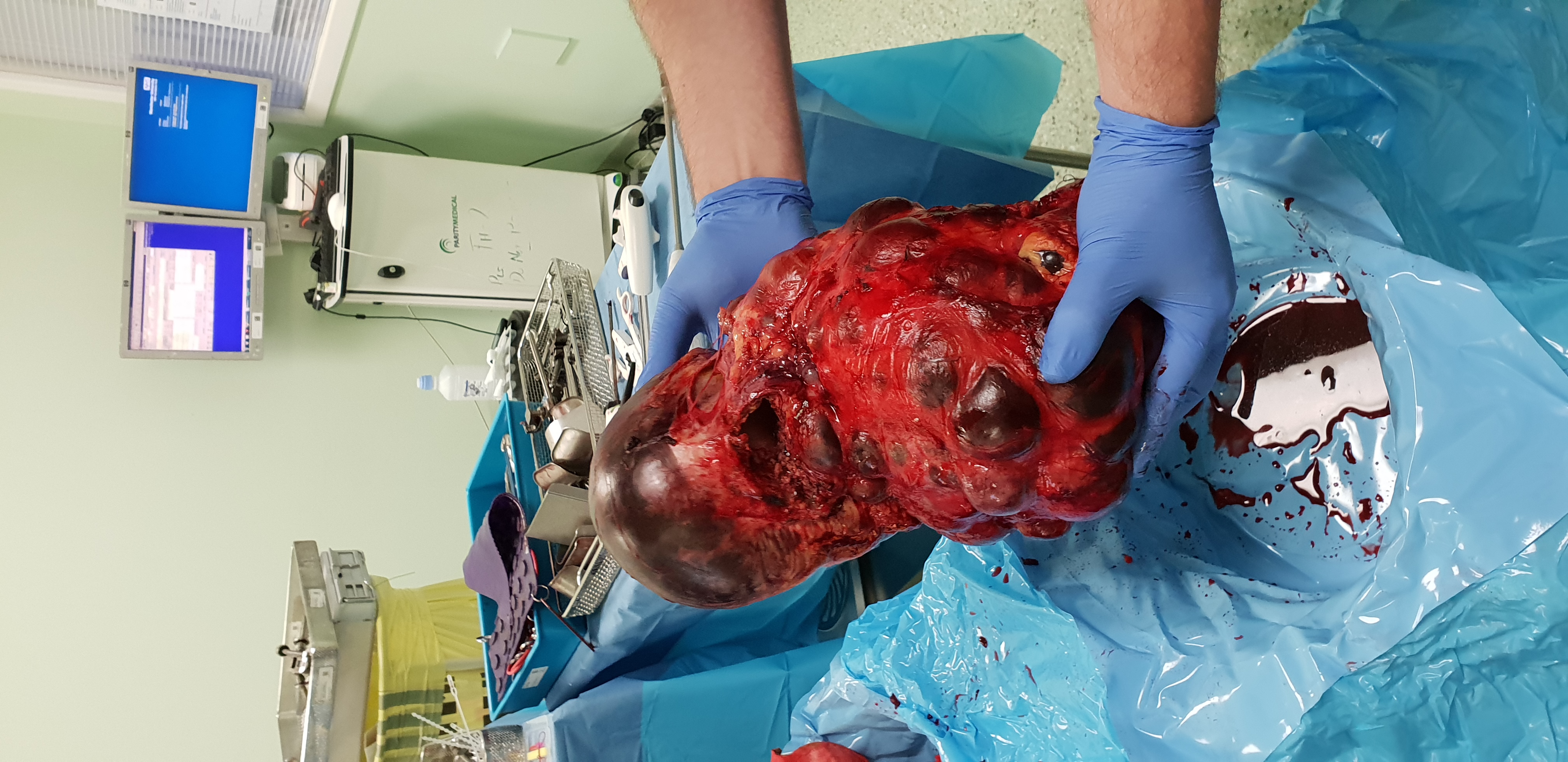
Plus, it’s been a fantastic technical reference when I’ve given talks on PKD and kidney disease in general.
Still Standing — and Giving Back
In late 2015, NICE approved Tolvaptan — a medication that can slow cyst growth. It was too late for me, but since my son started on it, his kidney function has stabilised.
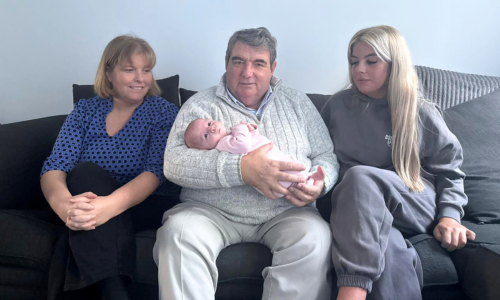
Now, in 2024, our granddaughter has had her first child — making me a great-grandfather. If you think back to when I first typed “PKD” into that clunky old computer, I’d already lived longer than the internet said I would. But here I am — still going strong — and holding my great-granddaughter.
One of the hardest times was giving up my job as a clinical supervisor with the Northwest Ambulance Service. That hit us hard financially. But I’ve kept busy with voluntary work — sharing my experience and raising awareness of kidney disease. I always tell people: get a hobby that involves other people. It makes a difference.”
Looking Ahead: PKD Research and Support
|
UK kidney patients can often arrange dialysis abroad through EHIC/GHIC coverage or private services — speak to your renal team well in advance if you’re planning a trip. Exciting UK research into PKD is underway. Teams at Sheffield and Leeds are looking at how to slow cyst growth and kidney enlargement, including organoid drug testing and genetic studies. The new PKD Partnership, led by the PKD Charity and Kidney Research UK, is poised to accelerate the development of effective treatments and improve the lives of those affected by PKD. By combining the strength of researchers, clinicians, patients and funders, the partnership aims to turn scientific progress into real-world change — faster. Later this year, the PKD Charity will also host two important live Q&A events:
And coming soon: the launch of a brand-new PKD Research Hub — a space where patients can directly shape future studies and clinical trials. If you'd like to be part of that, we'd love to hear from you. |
If you would like to speak to us about what support we can offer you or a loved one, please visit PKD Support or contact us today and speak to a member of our team.
ADPKD, Transplant, Dialysis, Organ Donation, PKD, PKDTreatment