
Robert's PKD Transplant Diary
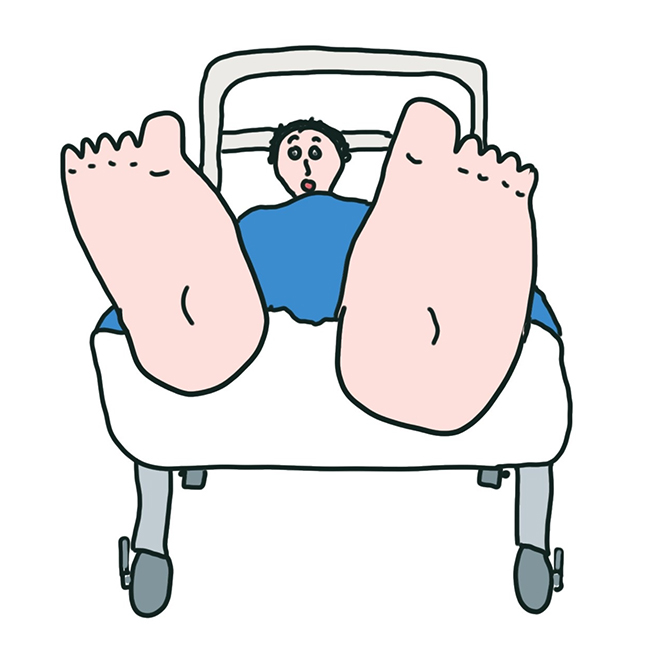
Robert is a Londoner with Yorkshire roots, a singer, songwriter, musician, and diarist whose account takes us straight into the heart of his transplant journey. Diagnosed with Polycystic Kidney Disease (PKD) at 15, his kidney function declined rapidly by age 27. At 36, he received a life-changing kidney transplant, a story he chronicles with wit, reverence, and his delightfully quirky perspective. From waking to feet swollen to gargantuan size (a classic post-transplant surprise) to nights kept awake by fellow patients’ incessant chatting and coughing, Robert captures both the highs and lows of hospital life.
Now 46, he marks his 10-year “kidneyversary” by publishing his transplant diary on Substack, inviting readers to witness the day-to-day reality of a procedure that reshaped his life. From a false-start donor kidney to the generosity of a paired donation involving his wife Sarah and another another donor recipient pair, Robert’s story is a testament to resilience, love, and the often surprising humour that carries us through difficult times.
Whether you have received or donated an organ, or simply enjoy a sharply observed, heartfelt tale of perseverance, Robert’s diary opens a window onto an experience that is intensely personal yet universally compelling.
Day 1 begins on the ward, a moment brimming with anticipation, nerves, and the first sparks of hope—here’s a taste, edited from Robert’s full diary:
Monday, November 16th 2015 – Day 1
In the ward it seems hospital policy is that no one sleeps for more than a couple of hours at a time, especially in the early morning. I was woken at 4am for blood sugar checks on two of the three other men in my room, then again at 6am when a nurse took everyone’s blood pressure. I’m sure mine would have been lower if I hadn’t just been woken!
By 7.30am, all the lights came on and a “team” of 29 doctors gathered around my bed. Actually, it was two doctors and 27 junior doctors. After talking to me, they all wanted a turn feeling my stomach. I fell back asleep, only to be woken by the anaesthetist explaining the drugs I’d get later. First something to relax me, then the main dose to keep me asleep for the five-hour operation. I asked if Sarah had arrived; she had, and was heading into surgery. I felt nervous for her but relieved everything was on track.
After flooding the bathroom during a shower, I waited with Sarah’s mum, Linda and her brother Charles. Sarah was in surgery and they were waiting for her to come out, the operation takes about three hours. Later, Charles reported that Sarah’s kidney had left the hospital, apparently in a lunchbox.
I got examined by a doctor who drew an ‘X’ on my lower abdomen for the new kidney. Soon it was time. I got undressed, kept my slippers on, and followed a nurse to surgery. Our wristband machine wasn’t working, but we continued anyway.
In the surgery department, I glimpsed Sarah just coming around, looking puffy but in little pain. Professor Papalois, the surgeon who had just done Sarah’s operation and would now be doing mine, reassured me everything had gone well.
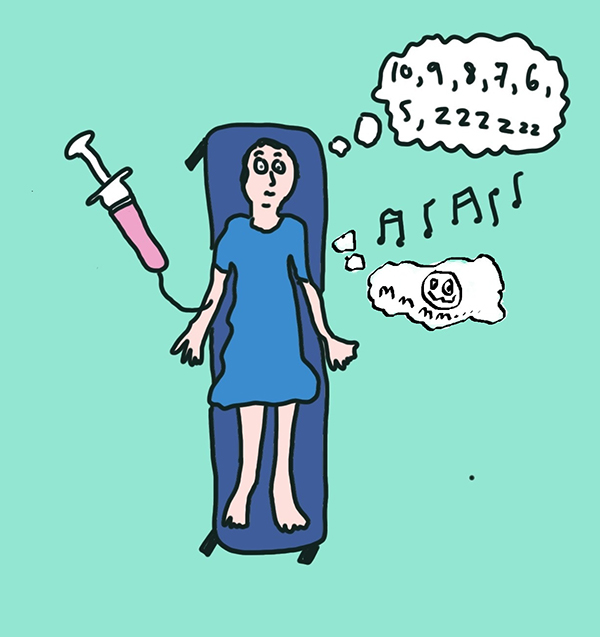
In a side room, the anaesthetist asked me if I knew why I was here. I tried to think of a humorous response (sex change operation, short back and sides...) but nothing seemed appropriate, so I said "to have a kidney transplant". I received the first injection. The room spun and I felt giddy. Then the main drug went in. I counted down from ten—still awake, still hearing the anaesthetist—wondering how long it would take...Zzzzz…
...Suddenly, loud voices, intense pain, and confusion. I was being moved between beds, unsure what had happened. It seemed like only a few seconds ago I was talking to the anaesthetist. Everything hurts, I told them, and could they please put me back to sleep or something. I’m sure this is what it must be like to be born, put me back in! Morphine was given, and soon I was drowsy again.
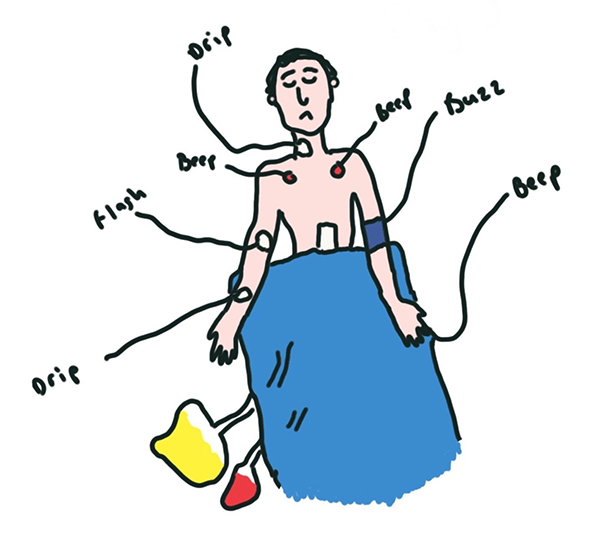
I woke up in the high dependency ward, the De Wardner Unit. Sarah was nearby but out of sight. My stomach had a big padded dressing, new tubes everywhere: cannulas, drips, a blood pressure cuff, oxygen tube, drain, and catheter leading to a large sack filling with urine from my brand new kidney. I knew where the other end of the catheter was but decided not to check that until tomorrow. I’d had enough excitement for one day.
I spent the night moaning and groaning in pain, complaining to the nurse that my morphine wasn’t working and that I was thirsty.
For the rest of Robert’s transplant journey, read his full diary on Substack.
Learn more about Living Organ Donation.
If you would like to speak to us about what support we can offer you or a loved one, please visit PKD Support or contact us today and speak to a member of our team.
ADPKD, Living Donation, Organ Donation, PKD, PKDTreatment, pkd belly, blood pressure