


Helpline

0300 111 1234

Symptoms of ADPKD and tests in children

This information is for parents who have been told that their child might have autosomal dominant polycystic kidney disease (ADPKD). It’s also for parents of children already diagnosed with ADPKD. Most older teenagers will be able to follow this information too. It explains how ADPKD can affect children, the tests available to diagnose ADPKD, and what happens next.

Key facts

  • ADPKD is a rare condition causing many fluid-filled pouches (cysts) to grow in the kidneys.
  • Most children with ADPKD don’t have symptoms that cause problems.
  • Up to a quarter of children get symptoms such as weeing often, high blood pressure, pain or urinary tract infections.
  • Children with a close relative who has ADPKD can usually have a kidney scan or blood test to check for ADPKD.
  • Your doctor can put you in touch with a kidney specialist and specialist in inherited conditions to help you decide whether to get your child tested.
  • Children with ADPKD usually have check-ups on their kidneys and blood pressure once every 2 years.
  • Most children with ADPKD don’t need treatment until they reach adulthood.
  • If your child has high blood pressure, medicines can help to lower it.
  • A healthy diet and lifestyle are good for all children, whether or not they have ADPKD.
  • Always check with your doctor or pharmacist that any medicine is safe for your child before giving it to them.

What is ADPKD?

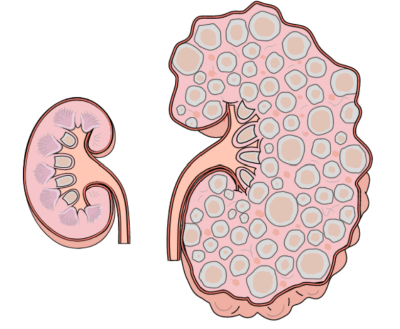
About 1 in every 1,000 to 2,500 people are born with ADPKD. The condition causes many fluid-filled pouches (cysts) to grow in the kidneys. These cysts form in the fine tubes that filter blood to make urine. As the cysts become larger, the kidneys grow in size and stop working properly.

A picture of a normal kidney compared with an ADPKD kidney. The ADPKD kidney is much larger and has many cysts of varying size.

ADPKD is a ‘progressive’ condition, meaning it gets worse over time. It usually takes decades for the cysts to grow as much as those shown in the drawing.

Symptoms of ADPKD in children

Often, ADPKD doesn’t cause problems until adulthood.

Kidney cysts can start forming in childhood, but children usually have plenty of normal kidney tissue to filter their blood.

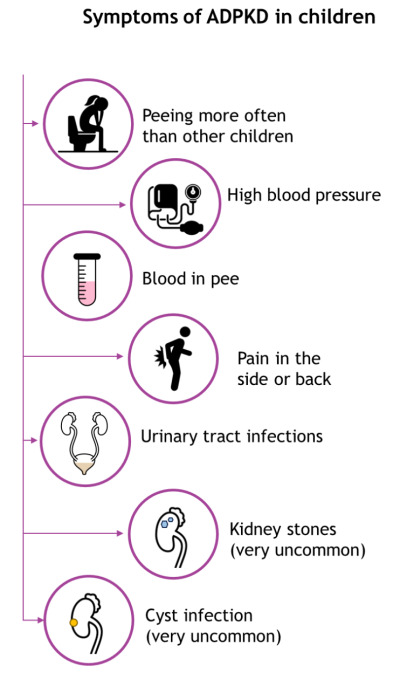
Most children with ADPKD don’t have symptoms that cause problems. However, up to a quarter of children with ADPKD have some symptoms or problems related to ADPKD. These can include:

A picture of the symptoms of ADPKD in children, as listed in the text above.

About 1 in every 5 children with ADPKD has high blood pressure. This usually doesn’t cause symptoms but can be picked up using a blood pressure monitor. High blood pressure is often the first sign of ADPKD (although many people don’t get it until adulthood).

When you have high blood pressure, it means your blood is being pumped around your body with more force. It’s important that blood pressure is checked in people with ADPKD and treated if it becomes too high. We explain this later. 

Children are more likely to get symptoms as their ADPKD gets worse and their cysts become bigger.

Can children be tested for ADPKD?

Tests are available to check for ADPKD in children and adults. If a child’s biological mum or dad has ADPKD, there is a 1 in 2 (50%) chance that the child has ADPKD too. By ‘biological’, we mean parents by birth, not by fostering or adoption.

Children with a biological parent or other close relative with ADPKD can have a test for ADPKD if their parents and doctor agree. Children who are old enough to understand should help to decide.

Children who don’t have a close relative with ADPKD can’t normally have a test for ADPKD. This is because the condition is so uncommon. However, if a doctor notices a possible sign of ADPKD (for example, kidney cysts on a scan done for other reasons), then the child may be offered an ADPKD test.

If you (or your child’s other parent) have ADPKD and you’d like to look into getting your child tested, speak to your doctor. They can refer you to a kidney specialist and a specialist in inherited conditions to help you decide.

How are tests for ADPKD done?

There are two tests that can be used to diagnose ADPKD:

  • an ultrasound scan
  • a test to look for ADPKD genes

Children with a close relative with ADPKD can have either test. Children without a relative with ADPKD but with a possible sign of ADPKD usually have a gene test.

Ultrasound

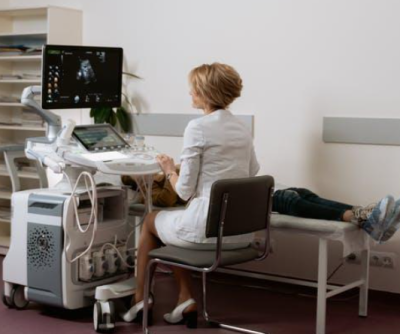
A radiologist can use an ultrasound machine, which uses sound waves, to see inside the body.

A radiologist sits on a chair with an ultrasound machine and screen in front of them. A person lies on a bed next to the radiologist, ready for their scan.

Using ultrasound they can check for kidney cysts in children. It takes 15–45 minutes, is painless, and the sound waves don’t cause harm.

If your child has a close relative with ADPKD and more than one cyst is seen on their ultrasound scan, it’s very likely that they have ADPKD. To confirm this for sure, they’ll need either another scan when they’re older or a genetic test.

If cysts are not seen, this could mean either:

  • your child does not have ADPKD
  • your child has ADPKD but their cysts are too tiny to see on a scan

In this case, your doctor will suggest another scan when your child is 15–18 years old or an adult. Your child can decide if and when to have this future scan.

Tests for ADPKD genes

ADPKD is caused by an altered gene. Genes are instructions in the cells of our bodies and tell the body how to grow and function. People with ADPKD usually have an alteration (a mutation) in a gene called PKD1 or PKD2. Uncommonly, a different gene is involved. The altered gene causes some changes to a person’s kidneys, which is why the cysts grow.

A person can be tested to see whether they have a faulty PKD gene. These tests for are usually done on a small sample of blood.

A laboratory worker checks the DNA in the blood cells for a faulty PKD gene. If they look for a single gene (or only a few genes), this is called a genetic test. If they read the whole genetic code, this is called genomics. Either test can be used to diagnose ADPKD.

If the precise gene alteration causing ADPKD in other family members is already known, a genetic or genomic test can say for sure whether or not your child has ADPKD.

For more information on the genetics of ADPKD and these tests, see our factsheet Genetic testing and counselling for ADPKD.

Deciding whether to go ahead with an ADPKD test

When a parent has ADPKD, they often ask us whether or not they should get their child tested. Parents, children (if old enough to understand) and doctors should decide together.

There are some good and bad points to having your child tested. Your doctor can put you in touch with a kidney specialist and a specialist in inherited conditions to help think it through.

Some of the good sides are:

  • Often, the test gives a clear answer on whether or not a child has ADPKD. This can mean less uncertainty for you and your child.
  • If your child is diagnosed with ADPKD, you and they can mentally prepare for the future. For example, you can get used to the idea that they may need dialysis or a transplant when they’re older.
  • If your child’s test confirms they don’t have ADPKD, it will be a relief and mean you and they worry less about their future.
  • If new treatments for ADPKD become available, doctors may be able to offer these to your child.

Some of the downsides are:

  • Sometimes, a test for ADPKD doesn’t give a clear answer on whether or not a child has ADPKD. This can be frustrating.
  • Some children might regret knowing that they have ADPKD because it makes them worry or feel different to others.
  • If your child is diagnosed with ADPKD, doctors won’t be able to tell you with certainty how it will affect them and at what age.
  • If your child is diagnosed with ADPKD, this could affect their health insurance or life insurance.

To help you talk about ADPKD as a family, see our web page Talking to children and young people. We also have a web page on insurance.

If you decide not to get your child tested for ADPKD yet, it’s still a good idea to have their blood pressure checked every year or so.

Check-ups for children with ADPKD

Children with ADPKD are unlikely to show symptoms, although changes are already starting in their kidneys. This is where check-ups can help.

The aims of check-ups for children with ADPKD are:

  • to check for high blood pressure
  • to check for signs of kidney damage
  • to give advice and support

Children with ADPKD usually have a check-up once every year or two. This includes a blood pressure test. Your child’s kidney specialist (nephrologist) might suggest other tests too, depending on your child’s symptoms and kidney health.

Your child will continue to have check-ups as an adult.

Blood pressure checks

About 1 in every 5 children with ADPKD has high blood pressure (hypertension). It’s more common in children with a parent whose ADPKD progressed quickly.

High blood pressure becomes more likely as people get older and their ADPKD gets worse.

Having high blood pressure might put strain on the heart and blood vessels.Because of this, experts recommend that all children diagnosed with ADPKD (or at risk of having ADPKD) have a blood pressure check done at the doctor’s every 1 or 2 years.Children with high blood pressure can take medicines to reduce it.

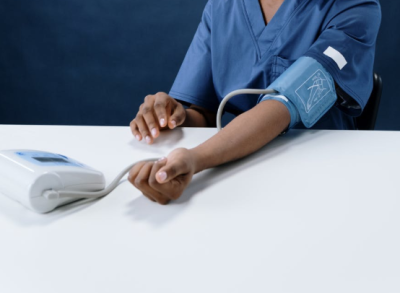
A blood pressure check is quick and simple. It involves your child wearing a blood pressure cuff on their arm for a minute or so while it measures the pressure of their blood.

A picture showing a person having a blood pressure reading. They have a cuff wrapped around their upper arm. Their lower arm is resting on a table. A cable comes from the cuff to a device which displays their blood pressure.

If your child is aged 5 years or older, your doctor might recommend they have a blood pressure check using a device that measures their blood pressure at home over 24 hours. This is called ‘24-hour blood pressure monitoring’ or ‘ambulatory blood pressure monitoring’. The cuff inflates and deflates automatically many times over 24 hours, both day and night.

If 24-hour blood pressure monitoring is not available or suitable for your child, it’s okay to have a blood pressure check at the doctor’s or using a home monitor instead.

Some parents and children find it reassuring to do regular blood pressure checks at home. If you decide to buy a blood pressure monitor, make sure you use a cuff the right size for your child’s arm. This helps you get accurate readings.

If your child could have ADPKD but you have chosen not to get them tested for yet, they can still have blood pressure checks.

If your child is diagnosed with high blood pressure, your doctor might refer them to a heart specialist (cardiologist) to check their heart. This test is called an echocardiogram and uses ultrasound to make an image of the heart. The cardiologist can use an echocardiogram to check your child doesn’t have a thickened heart wall (called left ventricular hypertrophy). This can sometimes happen as a result of high blood pressure.

Urine tests

Urine tests show how well your child’s kidneys are working. If their kidneys are not working as well as they should, protein levels in their pee will rise. Experts are not sure how often it’s best to do urine tests in children with ADPKD. Your doctor is likely to suggest a test every few years, depending on your child’s kidney health.

Kidney scans

Doctors can use scans, such as an ultrasound scan or magnetic resonance imaging (MRI), to check the size of your child’s kidneys and to look for cysts. This helps your doctor to work out how quickly your child’s ADPKD is getting worse.

How often your child has a scan will depend, in part, on whether they have symptoms:

  • If your child’s ADPKD is getting worse, they may have scans up to once a year.
  • If your child has no symptoms or cysts, they might not need another scan until they’re 15 to 18 years old.

Why scans for brain aneurysms aren’t routine

A brain aneurysm is a swollen blood vessel, like a small berry, in the brain. They can occur in adults with ADPKD. Uncommonly they can burst, which is dangerous.

However, it’s rare for children with ADPKD to get a brain aneurysm, and it’s extremely rare for them to burst in children.

Hundreds of thousands of children across the world have ADPKD, yet there are very few reports of brain aneurysms causing problems in children.

Because of the low risk, experts recommend that children should not routinely have brain scans to check for aneurysms. The risks that come with these scans and with treatment (if needed) could be greater than the benefits.

We understand that brain aneurysms can be a scary thought for parents and children. If they’re causing you or your child ongoing worry, talk to your child’s GP or kidney specialist.

Do children with ADPKD need treatment?

Most children with ADPKD don’t need treatment for ADPKD or its symptoms until they reach adulthood.

A person holding a packet of tablets.

Treating high blood pressure

If your child has high blood pressure, your doctor might refer them to a specialist in childhood kidney conditions (a paediatric nephrologist) or other local expert.

The doctor or specialist may recommend a medicine such as an ACE inhibitor (angiotensin-converting enzyme inhibitor) or ARB (angiotensin receptor blocker) to reduce your child’s blood pressure. This is to help protect your child’s kidneys and reduce their risk of having heart problems or blood vessel disease in the future.

Ask your doctor to explain the benefits and risks of different medicines available for your child.

Treating a urinary tract infection

If your child has a urinary tract infection, their doctor will treat this with antibiotics.

Treating tummy pain

If your child has abdominal (tummy) pain, it’s unlikely to be caused by their ADPKD. To be sure, their doctor might want to do tests to check for an infected or bleeding cyst or a kidney stone. This will depend on your child’s symptoms.

Doctors usually recommend that children with ADPKD don’t take non-steroidal anti-inflammatory drugs (for example ibuprofen or Nurofen®). These medicines can harm the kidneys of people with ADPKD.

Your doctor or pharmacist can recommend safer painkillers for your child.

Medicines to slow ADPKD progression

Currently, there are no medicines to stop ADPKD worsening in children.

A drug called tolvaptan (brand name Jinarc®) can help to slow down kidney damage in some adults but it’s not licensed for use in children.

A recent trial found some evidence that tolvaptan might work in children. Children taking tolvaptan had less growth in their kidney size than children taking a placebo (‘dummy’ pill). Side effects that could affect a child’s day-to-day life were common, such as thirst and weeing often.

The trial was short and the results were not strong enough to pass statistical tests. More research is needed before experts can decide whether tolvaptan is suitable for children.

Helping children with ADPKD to stay healthy

Parents often ask us if there is anything they can do to protect their child’s kidneys from damage. Unfortunately, doctors have few answers. A healthy diet and lifestyle are good for all children, whether or not they have ADPKD. Here is a summary of what we know so far:

Diet and lifestyle

No specific diets have been tested in children with ADPKD. A normal healthy diet is thought to be fine. Children with ADPKD should eat a normal amount of protein, not an unusually high amount.

Weight

ADPKD might start to cause changes to the kidneys sooner in people who are overweight or obese. A healthy diet and exercise can help your child to stay a healthy weight.

Salt

Eating too much salt can speed up kidney damage in adults with ADPKD. Although we don’t know whether salt affects children in the same way, it’s a good idea to help your child avoid too much salt.

The NHS has general advice on how much salt children should eat according to their age. Don’t add salt to your child’s food. Avoid processed foods as much as possible, as these tend to have a lot of salt.

Drinking fluid

It’s not proven that drinking extra fluid can help children with ADPKD. Your child should drink enough to avoid feeling thirsty, but they don’t need to drink unusually large amounts. You can check that your child is drinking enough by looking at the colour of their urine — it should be clear to light yellow.

Dangerous sports

If your child has very large kidneys or cysts that tend to bleed, their kidney specialist may recommend that they avoid some sports (for example, rugby or martial arts). This is to reduce the risk of them injuring their kidneys. This doesn’t mean your child needs to avoid all sport.

Smoking

Explain to your child the dangers of smoking. As well as the usual risks (including cancer), smoking can increase the speed at which ADPKD worsens and can lead to kidney damage.

Medicines to avoid

Always check with your doctor or pharmacist before giving your child any medicine to check it’s safe for them. This includes medicines you can buy without a prescription. Most medicines are fine but some can damage the kidneys of people with a kidney condition.

Examples of medicines that people with a kidney condition should only take if a doctor says it’s okay are non-steroidal anti-inflammatory drugs (ibuprofen and Nurofen®).

Ask for safe alternatives for your child.

Further information

All of our publications are based on references but these are removed for ease of reading on our webpages. A version of this webpage with references included is available upon request by emailing [email protected]

Authors and contributors

Written by Dr Matko Marlais, Consultant Nephrologist, Great Ormond Street Hospital, London, and Hannah Bridges PhD, Medical Writer, HB Health Comms Ltd, London.

With thanks to all those the people affected by ADPKD who contributed to this publication.

Last updated: © February 2025 (v3.0).

Due for medical review: February 2028.

Ref No: ADPKD.ICYP.V3.0

Disclaimer: This information is primarily for people in the UK. We have made every effort to ensure that the information we provide is correct and up to date. However, it is not a substitute for professional medical advice or a medical examination. We do not promote or recommend any treatment. We do not accept liability for any errors or omissions. Medical information, the law and government regulations change rapidly, so always consult your GP, pharmacist or other medical professional if you have any concerns or before starting any new treatment.

If you don't have access to a printer and would like a printed version of this information sheet, or any other PKD Charity information, call the PKD Charity Helpline on 0300 111 1234 (weekdays, 9am–5pm) or email [email protected]

The PKD Charity Helpline offers confidential support and information to anyone affected by PKD, including family, friends, carers, newly diagnosed or those who have lived with the condition for many years.

Feedback

We welcome feedback on the information provided on this webpage. If you have any feedback regarding the information provided on this webpage, please complete the Feedback Form