Helpline

0300 111 1234

Surgical procedures

Types of surgery for ADPKD

Find out about the different surgical procedures that are sometimes used to treat problems caused by kidney cysts in autosomal dominant polycystic kidney disease (ADPKD).

Contents

Surgery to treat ADPKD

Autosomal dominant polycystic kidney disease (ADPKD) is a genetic condition that causes cysts to grow in the kidneys. As these cysts gradually enlarge, kidney function falls, often eventually resulting in kidney failure.

Many aspects of ADPKD can be managed with lifestyle changes and medications. However, some problems that develop in the kidneys – such as pain, infection, bleeding and kidney failure – can mean that surgery is needed. If your treatment team thinks that you could benefit from surgery, they’ll explain why. All the procedures described here are considered safe and outcomes are usually good. But they do have some risks. Your surgeon will talk you through the risks and benefits, what the procedure involves, and any alternatives.

In this fact sheet, we introduce some of the more common surgical procedures that patients with ADPKD can need due to changes in the kidneys. These are:

  • Preparation for dialysis
  • Having a kidney transplant
  • Removing damaged kidneys
  • Treating kidney complications
  • Treating an overactive parathyroid gland

It’s also possible to need surgery or minimally invasive procedures to treat changes in the liver or a brain aneurysm. You’ll find more information about these treatments in our factsheets on polycystic liver disease and aneurysms.

Surgery to prepare for haemodialysis

Haemodialysis involves passing the blood through a filtering machine, called a dialyser. This removes waste and extra fluid from the blood. If you’re going to start having haemodialysis, you’ll usually first need to have an enlarged blood vessel made under your skin. This is called an arteriovenous fistula (or AV fistula). The fistula is where needles will be inserted into your arm to connect your blood to the dialysis machine.
An AV fistula is made by a surgeon by connecting one of your veins (which carries blood to the heart) to one of your arteries (which carries blood away from the heart). AV fistulas help to get good blood flow to the dialyser. Sometimes, a slightly different procedure is used, where an artery is connected to a man-made tube, called a graft.

The procedure is relatively simple and is done under local or general anaesthesia. It is usually done as a ‘day case’, which means you probably won’t need to stay in hospital overnight. The fistula takes about 4 to 8 weeks to heal and become strong. After this time, you’ll be ready for starting haemodialysis.

If you need to start haemodialysis sooner than this, you might have a catheter (tube), placed into a vein in your neck or groin as short-term solution. This is called a central venous catheter. However, these catheters are more likely to get infected, get a blood clot, or cause hardening of the blood vessel than an AV fistula. So, your treatment team will probably recommend an AV fistula if you’ll be having haemodialysis long term.

There is a risk that AV fistulas can get infected. Infections in the blood stream can be serious, so it’s important to keep the area clean

Surgery to prepare for peritoneal dialysis

Peritoneal dialysis uses a special fluid placed in an area of your lower abdomen, known as the peritoneal space. This fluid absorbs toxins. Your peritoneal space houses your bowels and liver and is surrounded by a membrane called the peritoneum.
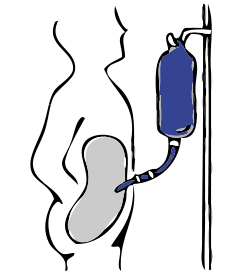
Before you can start having peritoneal dialysis, you’ll first need simple surgery to have a tube fitted through your skin into your peritoneal space. This tube – called a peritoneal catheter – will stay by your belly button permanently. You’ll use it to add and remove fluid from your abdomen.

The surgery to fit a peritoneal catheter is done under general or local anaesthetic as a day case. It will take 2–3 weeks for the area to heal, and then you can begin having peritoneal dialysis sessions. A downside of peritoneal dialysis is that some people find it hard to get used to having a peritoneal catheter. It’s also possible that bacteria will get into your body via the catheter, which could cause a serious infection. So, it’s important to keep it clean.

Having one or both kidneys removed

If your kidneys begin to fail, your treatment team probably won’t recommend removing them unless they’re causing serious problems. (You can receive a kidney transplant without your own kidneys being disconnected and removed.) Even if your damaged kidneys are no longer filtering waste from your body effectively, they might still be removing excess fluid from your body, and so they can still be useful. Also, having one or both kidneys removed (known as nephrectomy) is a major operation. Like all major operations it has some risks – such as bleeding or getting an infection – and so should only be done when necessary.

However, if your damaged kidneys are causing you a lot of pain and other treatments are not helping, your surgeon may recommend removing them. The pain could be caused by repeated infections or cyst bleeding for example.

Another reason for nephrectomy is if you’re due to have a kidney transplant but your own kidneys are very large and there would not be sufficient room for your new donor kidney. In this instance, one of your own kidneys can be removed to create space.

Nephrectomy is a major operation, so be sure that your surgeon explains the risks and benefits to you. Risks can include:

  • bleeding
  • problems with the heart or circulation
  • injury to other organs, such as bowel, spleen or liver
  • infection
  • the wound reopening

These might require further treatment or surgery. However, your surgeon will perform the operation extremely carefully to minimise any risk to you.

Your surgeon will talk you through the technique they’ll use to remove your kidney (or kidneys) beforehand. They might need to make a large cut to get to your kidney, but sometimes keyhole surgery (laparoscopy) can be used, which involves a few small cuts being made. Laparoscopy has the advantages of usually being less painful, having a swifter recovery (and so shorter hospital stay) and having less scarring. If your kidneys are very large though, your surgeon will need to make a larger cut to remove them.

If you’re having a kidney removed to make room for a kidney transplant, you’ll probably be ready to have the transplant within 6 to 8 weeks.

A downside of having your kidneys removed is that, unless you have a transplant, you’ll have to be very careful to limit the amount of fluid you drink. This could affect your quality of life.

Having a kidney transplant
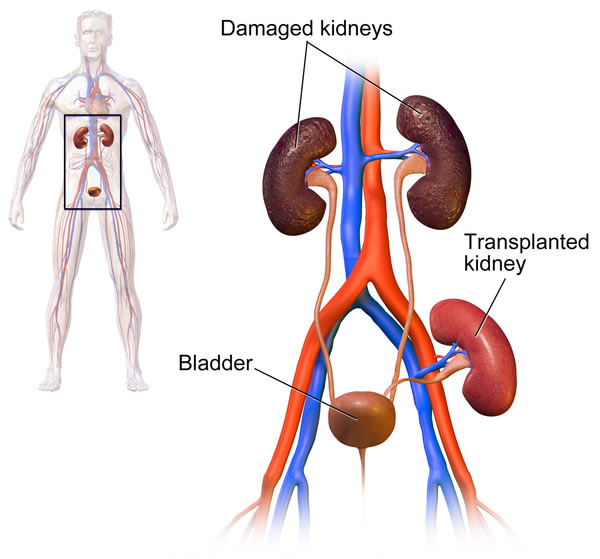
If your kidneys are failing, an alternative to dialysis is a kidney transplant. Kidney transplantation is the best treatment for ADPKD patients with kidney failure. It improves quality of life and survival, and is cost-effective for hospitals to provide. Most ADPKD patients with kidney failure are suitable for the procedure. Your donor kidney could come from a living person (usually a relative, but they can be unrelated). If this is not possible, you can be put on a waiting list for a donor kidney from a deceased person. Either way, the surgery is performed under general anaesthetic. In the transplant operation, your surgeon will place your new kidney in your groin and connect it to your blood vessels and bladder (see Figure 3).

The surgery takes about 3 hours. You’ll need to stay in hospital for about 5 days while you recover. A kidney transplant comes with some risks, including bleeding, internal urine leaks, getting an infection, and having side effects from the drugs you’ll need to take after your operation. We describe these in more detail in our factsheet on kidney transplants.

After your transplant, you’ll be followed up at the transplant clinic by kidney specialists and transplant surgeons to check you’re healthy and that your new kidney is working well.

Treating kidney complications

Complications such as pain from a large cyst or enlarged kidneys might well be treatable without surgery. However sometimes surgery or minimally invasive procedures can be helpful when pain is not improving with pain killers.

Minimally invasive procedures

If you have a large kidney cyst that is causing pain, a specialist radiologist can drain the fluid from it using a large needle. This is called percutaneous cyst aspiration. Your radiologist will use ultrasound or a CT (computed tomography) scan to guide the needle to the cyst.

Unfortunately, cysts usually refill with fluid. Drained cysts can be treated to reduce the chance of them refilling. One way to do this is for the surgeon to inject alcohol into the cyst under local anaesthesia (or general anaesthesia in some cases). This is known as sclerotherapy.

This risk of the procedure depends on how deep the cyst is within the kidney, and also how many cysts you have treated. You may get small amounts of bleeding, some pain or a fever during the procedure, but more serious risks are minimal.

In some countries, other techniques – such as trans-arterial embolisation – are being used in some cases where surgery would be too high risk. For this, the radiologist will give the patient a local anaesthetic and feed a thin tube (a catheter) into one of the arteries in the groin. They’ll feed this tube through the artery into a blood vessel supplying blood into the kidney. They’ll then treat this artery to block it by causing a blood clot to form. This restricts the blood supply to kidney, causing it to shrink. Trans-arterial embolisation might reduce pain and discomfort longer term, although may initially cause pain and fever for a few days. Although this technique is not currently widely used in the UK, it might become useful in some situations in the future.

Cyst surgery

If you have painful cysts, an alternative to sclerotherapy is to remove the part of the wall of the cyst and allow the fluid to drain into the peritoneal space. This process is called deroofing or fenestration. It’s a bigger procedure than sclerotherapy and involves surgery (either keyhole surgery or open surgery) under general anaesthetic. It’s also possible to surgically remove nerves to the kidney so that they no longer feel pain.

These procedures carry the risks associated with surgery, such as bleeding and infection, but work well to reduce pain in most patients.

Having your parathyroid gland removed

If you have kidney failure and are using dialysis, it’s likely that you’ll develop overactive parathyroid glands over time. Your parathyroid glands are four small glands (the size of peas) in your neck that control levels of calcium and phosphate in your body. They’re different to your thyroid gland.

The parathyroid glands can become overactive because kidney failure makes your blood calcium levels fall, and the glands begin to work harder to try to correct this. Overactive parathyroid glands can cause your bones to lose calcium and lead to bone pain. Often, this can be treated with medications. However, if medications don’t work, you may need to have the glands removed surgically. This is called parathyroidectomy.

The operation is done under general anaesthetic and takes about 1 hour. Your surgeon will need to make a cut in your neck to reach the glands. It usually takes a day to recover, meaning you’ll probably need to stay in hospital overnight.

More from the PKD Charity

More information from others

Authors and contributors

Written by Mr Badri Man Shrestha, BSc MBBS MS MPhil MD FRCS(Eng & Gen) Hon.FRCS(Edin) FACS FICS FEBS, Consultant Transplant Surgeon, Sheffield Teaching Hospitals NHS Trust.

Edited by Hannah Bridges, PhD, independent medical writer, HB Health Comms Limited.

With thanks to all those affected by ADPKD who contributed to this publication.

IS Ref No: ADPKD.SP.2017V1.0
UNDER REVIEW

Disclaimer:  This information is primarily for people in the UK. We have made every effort to ensure that the information we provide is correct and up to date. However, it is not a substitute for professional medical advice or a medical examination. We do not promote or recommend any treatment. We do not accept liability for any errors or omissions. Medical information, the law and government regulations change rapidly, so always consult your GP, pharmacist or other medical professional if you have any concerns or before starting any new treatment.

We welcome feedback on all our health information. If you would like to give feedback about this information, please email [email protected]

If you don't have access to a printer and would like a printed version of this information sheet, or any other PKD Charity information, call the PKD Charity Helpline on 0300 111 1234 (weekdays, 9am-5pm) or email [email protected]

The PKD Charity Helpline offers confidential support and information to anyone affected by PKD, including family, friends, carers, newly diagnosed or those who have lived with the condition for many years.

Read more …Surgical procedures

  • Hits: 21061

Medications to treat ADPKD

Medications to treat ADPKD

This factsheet is for people with autosomal dominant polycystic kidney disease (ADPKD), their family and friends. It explains some of the different medicines used to treat ADPKD and its symptoms. It also lists some medicines you should avoid if you have ADPKD.

Contents

Tolvaptan to slow the progression of ADPKD

Kidney cysts in ADPKD 

ADPKD causes fluid-filled sacs called cysts to form in the kidneys. These cysts damage and enlarge the kidneys.

ADPKD is a progressive disease, meaning it gets worse over the years. By their late 50s, about half of all people with ADPKD develop kidney failure and need dialysis long term or a kidney transplant.

The only medication available to slow down the progression of ADPKD is tolvaptan.

a pitcure of a doctor talking to a patient

What is tolvaptan?

Tolvaptan (brand name Jinarc®) can slow the progression of ADPKD in adults. It works by blocking the receptor for a hormone called vasopressin in your body. This slows the speed at which kidney cysts grow and helps to keep your kidneys functioning for longer.

Tolvaptan is thought to work best when the kidneys are enlarging quickly yet still filtering blood efficiently (meaning they can do at least 30% of the work that a healthy kidney can). Tolvaptan is taken as a tablet twice a day.

Can I take tolvaptan?

Your kidney specialist (nephrologist) can explain whether tolvaptan is suitable for you and talk you through the benefits and risks. In the UK, tolvaptan is not recommended for everyone with ADPKD.

To be eligible, you need to:

  • be over 18 years old
  • have ADPKD that’s progressing rapidly now or is predicted to progress rapidly in the future
  • have stage 2 or 3 kidney disease (or stage 1, 2 or 3 in Scotland) at the time you start treatment

The stage of your kidney disease is estimated by blood tests. Your kidney specialist can explain what stage of disease you have and how quickly your ADPKD might progress. You might need to have further tests over the next 6 or 12 months before your doctor can estimate the speed at which your ADPKD is progressing.

If your kidney function is good and your disease is progressing very slowly, your doctor might say that you don’t need tolvaptan yet. If your kidneys are already failing you may be offered a different treatment (for example, dialysis or a kidney transplant).

How well does tolvaptan work?

3 years of treatment with tolvaptan was tested in a clinical trial of people with ADPKD who had mild kidney disease (stage 1 or 2). Its effects were compared with those of a placebo (a pill without any medicine in it). On average, the people taking tolvaptan had:

  • less rapid growth in kidney size
  • a slower drop in kidney function

A second trial found that tolvaptan also works in people with ADPKD who have mild-to-moderate kidney disease (stage 3).

The benefits of tolvaptan seem to last for at least 10 years in people who continue to take it.

What are the side effects of tolvaptan?

The most common side effects of tolvaptan include:

  • being thirsty and having to drink more water
  • needing to pee more often in the day and night
  • headaches and dizziness
  • diarrhoea
  • a dry mouth
  • feeling tired

In a clinical trial, around 2 in every 10 patients (20%) stopped taking tolvaptan because of the side effects. The side effect that bothered people most often was needing to pee (and drink) a lot.

Most people who are able to keep taking tolvaptan find it doesn’t affect their quality of life very much.

Tolvaptan can affect the liver but this is not common and reverses on stopping the drug. People taking tolvaptan have regular monthly blood tests to check their liver function.

For a full list of possible side effects, please ask your doctor or check the patient information leaflet that comes with tolvaptan.

Medicines to treat the symptoms of ADPKD

If your ADPKD is causing symptoms your kidney specialist or other doctor may recommend medicines to reduce these. Medicines can also help to reduce your chance of future health problems, such as cardiovascular disease.

Medicines for ADPKD symptoms include:

  • blood pressure tablets to lower your blood pressure if it is high
  • antibiotics to treat an infection in the bladder or kidneys (urinary tract) or liver cysts
  • pain killers to treat pain caused by enlarged kidneys

If you have a high risk of cardiovascular disease (which might be partly due to ADPKD), your doctor might recommend additional medicines. These include lipid-lowering drugs (statins) to reduce your cholesterol, and antiplatelet drugs (such as aspirin or clopidogrel) to reduce your risk of a stroke or heart attack.

Whether you need any of these medicines will depend on the symptoms you have. Your doctor or specialist will explain which treatments are best for you and why.

If you’re nearing kidney failure, your kidney specialist will discuss the options of dialysis and transplant with you. For more information, see our factsheet on Progression.

Medicines to avoid

If you have ADPKD and reduced kidney function, some drugs might not be suitable for you. You might also need to take some medicines at a lower dose than standard. Your doctor can advise you on this.

Before taking any medicine (including ones you can buy without prescription) check with your kidney specialist, GP or pharmacist that the medicine is safe for you.

If you have kidney disease, you should only use these medicines if your doctor advises you to:

  • non-steroidal anti-inflammatory pain killers such as ibuprofen (Nurofen® Advil® , Brufen® and other brands) and diclofenac
  • treatments for indigestion that contain potassium, aluminium, sodium or magnesium
  • a heartburn medication called cimetidine
  • decongestants such as pseudoephedrine (Brand name Sudafed®).

For more information on medicines to avoid if you have kidney disease, see Over-the-Counter Medicines by Kidney Care UK.

Some medicines may not be safe because:

  • Your kidneys won’t clear the medicine out of your body quickly enough, which could lead to side effects.
  • The medicine might damage your kidneys.
  • The medicine might not work properly.
  • Some medicines cannot be taken at the same time as others.

Although there are certain medicines you should avoid, this doesn’t mean you have to cope with untreated symptoms. Ask your doctor which medicines you can use instead.

More from the PKD Charity

More information from others

Further information

All of our publications are based on references but these are removed for ease of reading on our webpages. A version of this webpage with references included is available upon request by emailing [email protected]

Authors and contributors

Written by Hannah Bridges, PhD, Medical Writer, HB Health Comms Ltd, and reviewed by Professor Albert Ong, Professor of Renal Medicine, Academic Unit of Nephrology, University of Sheffield.

With thanks to all those affected by ADPKD who contributed to this publication.

Ref No: ADPKD.T.V2.0

Last updated: © January 2025 (v2.0).

Due for medical review: January 2028.

Disclaimer: This information is primarily for people in the UK. We have made every effort to ensure that the information we provide is correct and up to date. However, it is not a substitute for professional medical advice or a medical examination. We do not promote or recommend any treatment. We do not accept liability for any errors or omissions. Medical information, the law and government regulations change rapidly, so always consult your GP, pharmacist or other medical professional if you have any concerns or before starting any new treatment.

If you don't have access to a printer and would like a printed version of this information sheet, or any other PKD Charity information, call the PKD Charity Helpline on 0300 111 1234 (weekdays, 9am–5pm) or email [email protected]

The PKD Charity Helpline offers confidential support and information to anyone affected by PKD, including family, friends, carers, newly diagnosed or those who have lived with the condition for many years.

Read more …Medications to treat ADPKD

  • Hits: 37764

Introduction to dialysis

Introduction to dialysis

This information is for people with autosomal dominant polycystic kidney disease (ADPKD) who have or are nearing kidney failure. It’s also for their families and friends. It explains when you might have dialysis, the types available and how they might affect your health and life.

For more detailed information on the process of dialysis, see our pages on haemodialysis and peritoneal dialysis.

Contents

Key facts

  • Many people with ADPKD get kidney failure, on average at age 55–60 years old.
  • If you get kidney failure, you can have dialysis or a kidney transplant to replace some of the work of your kidneys.
  • About a quarter of people with kidney failure have long-term dialysis.
  • There are two main types of dialysis which work differently.
  • For haemodialysis, a machine filters your blood to remove waste and extra fluid.
  • For peritoneal dialysis, you add fluid into a space in your abdomen (tummy) where it can absorb waste and extra fluid from your blood.
  • Haemodialysis and peritoneal dialysis work equally well for most people and are equally safe.
  • Dialysis removes enough waste and fluid from your blood to reduce your symptoms and extend your life.
  • You’ll probably need to take some medicines and supplements too, for example, blood pressure tablets, vitamins and iron.
  • Most people need to follow a special diet and limit how much fluid they drink.
  • Having dialysis will have a big impact on your life but you can still have a good life.

When might I need dialysis?

If you have ADPKD, your kidneys’ ability to filter your blood (known as kidney function) will reduce over the years. Your kidneys may eventually stop working. This is known as kidney failure or end-stage kidney disease.

If you have kidney failure, your treatment options may include:

Your kidney specialist will explain which options are suitable for you.

In the UK, about a quarter of people with polycystic kidney disease (PKD) and kidney failure are on long-term dialysis.

How does dialysis work?

There are two main types of dialysis which work differently:

  • For haemodialysis, a machine filters your blood to remove waste and fluid.
  • For peritoneal dialysis, you add fluid into a space in your abdomen (tummy) where it can absorb waste and fluid. You can drain off the fluid and replace it with fresh fluid yourself, with help, or using a machine.

Of the people with PKD having dialysis in the UK:

How well does dialysis work?

Haemodialysis and peritoneal dialysis work equally well for most people and are equally safe.

Neither type of dialysis can filter blood as well as real kidneys. Dialysis does about 10% of the filtering that a healthy kidney can do. This removes enough waste and fluid from your blood to reduce your symptoms and extend your life.

The function of your own kidneys will continue to worsen over time.

Your kidneys have a few different jobs and dialysis can’t do them all. So, if you’re on dialysis, you’ll probably need to take some medicines and supplements to help you stay well.

These may include:

  • medicines to reduce your blood pressure
  • vitamins and iron supplements
  • phosphate binders (which reduce the amount of phosphate that your gut absorbs)
  • a hormone called erythropoietin (EPO), which tells your body to make more red blood cells

Most people need to follow a special diet and limit how much fluid they drink.

What’s it like to be on dialysis?

Having dialysis will have a big impact on your life, but you can still have a good life. It might take some time to get used to planning your life around your dialysis sessions.

Some symptoms caused by low kidney function are likely to improve once you start dialysis.

For example:

  • You may feel less sick, tired and weak.
  • Puffy ankles may improve.
  • You may feel less short of breath. 

Most people on dialysis can still work or study, exercise, drive and have holidays and trips away.

You may need some help from your family, friends or a carer. You’ll have support from your dialysis team. This team includes a doctor specializing in treating kidney conditions (a nephrologist) and a nurse. Other people such as a dietitian, social worker and clinical psychologist will be involved.

Dialysis can be frustrating and might get you down. Your kidney team might be able to suggest changes to your dialysis routine to reduce its impact on your life. Most kidney centres have a psychologist who you could chat to.

Talking to other people on dialysis, friends and family can help too. You can find others with ADPKD to chat to through our PKD support groups and ADPKD Facebook group.

You might be entitled to government benefits and other financial or practical help — the National Kidney Federation has information on this.

Will I have to follow a special diet?

Most people on dialysis need to follow a special diet and watch how much fluid they drink, especially those having haemodialysis.

You might be able to see a dietitian for people with kidney disease before starting dialysis.

They could help you plan your diet to:

  • avoid eating too much sodium (salt), potassium and phosphate
  • get enough vitamins and minerals
  • eat the right amount of protein
  • have the right number of calories
  • maintain a healthy weight

You can also ask to see a dietitian later for advice and support.

Can I stay physically active?

Keeping physically active helps to maintain and improve your fitness and strength. It can also reduce your risk of high blood pressure and cardiovascular problems.

You might find some types of exercise harder than you used to due to your kidney health. Your cardiovascular fitness may be lower than before and your muscles might be weaker. This will improve the more you do (as long as the exercises are right for you).

If you’d like advice on exercise, ask your kidney team or GP to refer you to a physiotherapist or other exercise specialist.

Some dialysis centres have spaces where you can exercise during your haemodialysis sessions. If you have a catheter in your abdomen for peritoneal dialysis you can still go swimming.

How long do people live on dialysis?

Dialysis will improve your life expectancy. How long you’re expected to live will depend on a few factors including your age, sex and health.

People with ADPKD tend to live longer on dialysis than people on dialysis for other reasons. One of the main reasons for this is that people with ADPKD on dialysis tend to be younger than other dialysis patients. Keep this in mind if you’re reading general information on dialysis.

If you’d like to know more, ask your treatment team.

Deciding which type of dialysis to have

Experts think haemodialysis and peritoneal dialysis are equally safe for people with ADPKD. Unless there is a reason one type of dialysis is not suitable for you, you can choose which type to have.

Your kidney doctor and other specialists will talk you through the pros and cons of each option. They can also help you decide whether to have dialysis at home, in a hospital or in a dialysis unit.

Factors to think about include:

  • what dialysis services are available in your local area
  • whether you prefer to do dialysis yourself or have expert help
  • who could help you do dialysis sessions at home if needed
  • what type of dialysis fits best into your life
  • any health problems that make one type of dialysis more suitable for you (for example, peritoneal dialysis may be less suitable for you if you have very large kidneys)

See our web pages on haemodialysis and peritoneal dialysis for information on each type of dialysis.

Kidney Research UK have a booklet to help people decide which type of dialysis to have: the Dialysis Decision Aid booklet. We recommend you read it. You may also find it helpful to talk to other people on dialysis, your healthcare team, friends, family or caregiver to help you decide.

Your decision does not need to be final. You’ll be able to chat to your dialysis team about how your dialysis is going and make changes to suit your lifestyle and needs. You might be able to change from one type of dialysis to another if your preferences change. You’ll need to have an assessment and surgical procedure to prepare first.

More from the PKD Charity

Information and support from others

The National Kidney Federation has information on government benefits and other financial and practical support for people with kidney disease. Rules on benefits change from time to time, so also check Gov.uk for the latest information.

Further information

All of our publications are based on references but these are removed for ease of reading on our webpages. A version of this webpage with references included is available upon request by emailing [email protected].

Authors and contributors

Written by Hannah Bridges, PhD, Independent Medical Writer at HB Health Comms Limited. Expert review by Matthew Gittus, PhD Fellow,
Sheffield Kidney Institute, University of Sheffield.

With thanks to all those affected by ADPKD who contributed to this publication.

Ref No: ADPKD.D.V1.0
© PKD Charity 2025
First published: June 2025
Due to be medically reviewed: June 2028

Disclaimer: This information is primarily for people in the UK. We have made every effort to ensure that the information we provide is correct and up to date. However, it is not a substitute for professional medical advice or a medical examination. We do not promote or recommend any treatment. We do not accept liability for any errors or omissions. Medical information, the law and government regulations change rapidly, so always consult your GP, pharmacist or other medical professional if you have any concerns or before starting any new treatment.

If you don't have access to a printer and would like a printed version of this information sheet, or any other PKD Charity information, call the PKD Charity Helpline on 0300 111 1234 (weekdays, 9am–5pm) or email [email protected]

The PKD Charity Helpline offers confidential support and information to anyone affected by PKD, including family, friends, carers, newly diagnosed or those who have lived with the condition for many years.

Read more …Introduction to dialysis

  • Hits: 7261

Haemodialysis

Haemodialysis

This information is for people with autosomal dominant polycystic kidney disease (ADPKD) who have or are nearing kidney failure. It’s also for their families and friends. It explains how you prepare for haemodialysis and what happens in haemodialysis sessions. It also looks at side effects and risks, monitoring and travel. 

See also our webpages introducing dialysis and about peritoneal dialysis.

Contents

Options for the treatment of kidney failure

If you have kidney failure, your treatment options may include:

  • a kidney transplant
  • dialysis (haemodialysis or peritoneal dialysis)
  • supportive medicines and care only

This page is on haemodialysis. To understand your other options, see our pages on Kidney transplants in ADPKD and an introduction to dialysis.

Preparing to have haemodialysis

If you choose to have haemodialysis, you’ll need a small surgical procedure beforehand to make a blood vessel easier to use.

There are two main access points that can be used for haemodialysis:

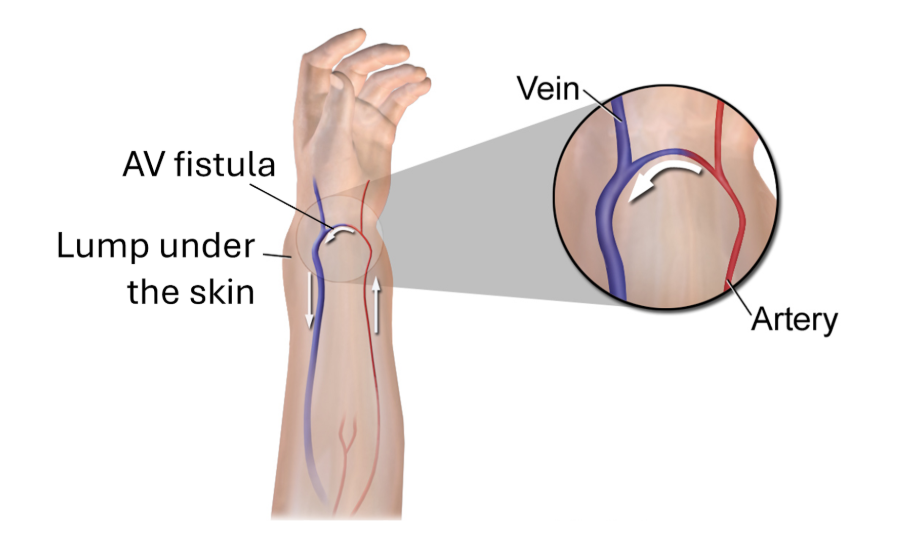
  • An AV fistula (also called an arteriovenous fistula) is an enlarged blood vessel in your arm.
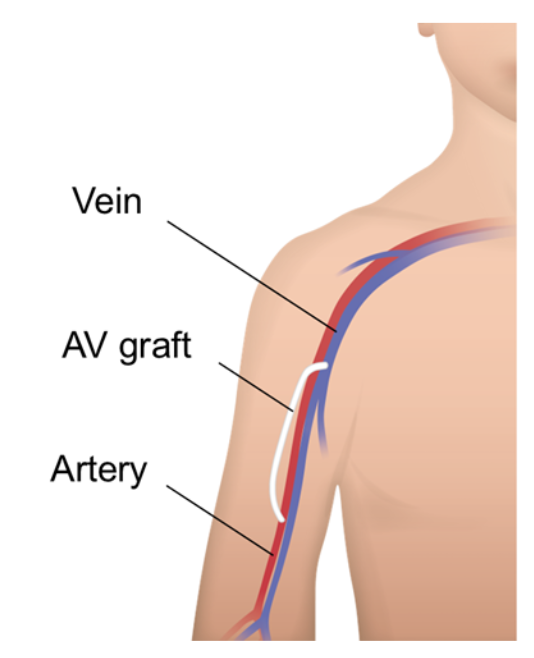
  • An AV graft (also called an arteriovenous graft) is a man-made tube that connects two blood vessels inside your arm.
Diagram showing an AV fistula. A vein and artery are shown running down the lower arm. The two vessels are joined so that blood can flow between them.  Diagram showing an AV graft. A vein and artery are shown running down the upper arm. The two vessels are joined by a tube under the skin.

You and your dialysis team will decide together which type of access point is best for you and where it will go.

A surgeon will make your AV fistula or AV graft using a small surgical procedure. You’ll have a general or local anaesthetic for this. Your access point will stay in place long term unless you stop having haemodialysis.

Most people starting haemodialysis have an AV fistula made a few months beforehand. If you need to start dialysis more urgently than this, you might have an AV graft.

Less commonly, people have haemodialysis using a tube (a catheter) that feeds under their neck skin and into a neck vein. This is called a ‘tunnelled line’.

The risk of infection is higher with a tunnelled line. It’s only used for emergency dialysis or for people who can’t have an AV graft or AV fistula.

Haemodialysis sessions

Each haemodialysis session takes about 4 hours and most people need about 3 sessions per week. The length and frequency of your sessions will be tailored to you.

Most people have haemodialysis in a hospital or dialysis unit but some have the equipment at home.

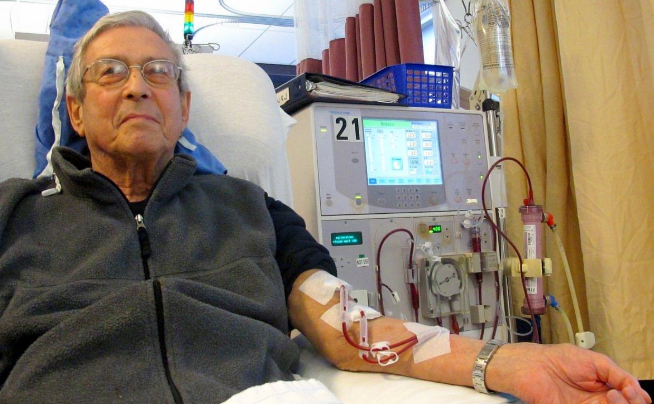
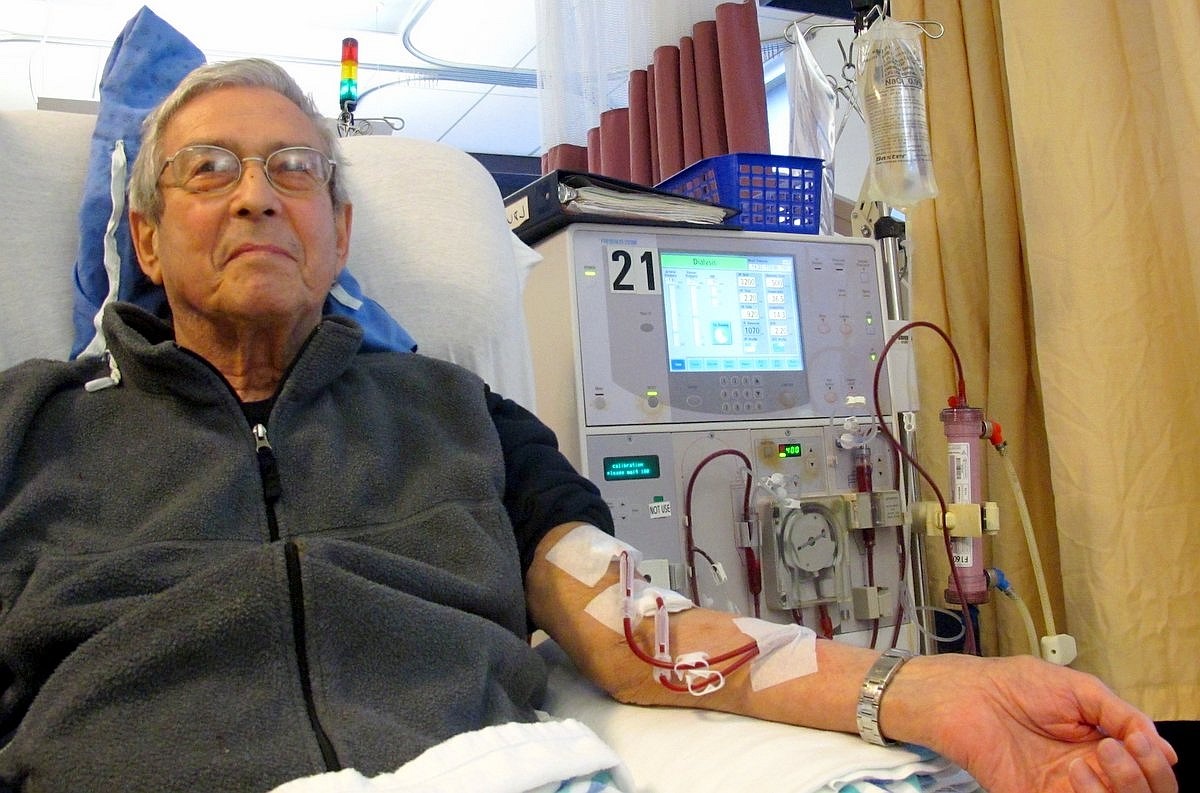
A man relaxed in a clinic chair beside a haemodialysis machine. The man has two tubes connected to his arm, carrying blood to and from the machine. The tubes are taped to his arm.

If you’re doing haemodialysis at home, you might be able to do shorter sessions more frequently. For example, these could be sessions of 3 hours on 5 days of the week or overnight sessions while you sleep.

At the hospital or dialysis unit, a nurse or healthcare assistant will insert two needles into your AV fistula or AV graft and connect tubes to these. Your blood will then travel through the tubes to and from the haemodialysis machine.

Alternatively, if you have a tunnelled line the nurse or healthcare assistant will use this to connect you to the dialysis machine.

You can learn to do some of the process yourself if you would like.

If you’re having home haemodialysis, you (or a relative or caregiver) will learn how to connect the haemodialysis machine. You’ll be able to contact your dialysis team for advice if you need.

The dialysis machine filters your blood through a man-made membrane, removing waste and excess fluid. You may hear the terms ‘haemofiltration’ or ‘haemodiafiltration’. These are slightly different processes for cleaning the blood.

Most people on haemodialysis have a blood thinner (usually heparin) before each session to reduce the risk of getting a blood clot.

Side effects and risks

Haemodialysis sessions can make you tired. Other side effects can include low blood pressure (which can make you feel sick or dizzy), itchy skin and muscle cramps. The needles can be uncomfortable — local anaesthetic can help.

If you have haemodialysis, there’s a risk of:

  • getting an infection in your access point, which could spread to your bloodstream
  • your access point getting blocked

You’ll need to follow advice to look after your access point to reduce the chance of infection. If you get an infection, you’ll need antibiotics either at home or in hospital.

If your AV fistula or AV graft gets blocked or narrows, you may need a procedure to correct this.

Monitoring

You’ll have regular monitoring (usually monthly) to check your dialysis schedule is working well to clean your blood and control your fluid levels.

This is also a chance for you and your dialysis team to review any side effects and discuss how haemodialysis is impacting your life. They might be able to suggest changes, treatments or support to help.

Travel

You can go on holiday and stay away from home if you’re on haemodialysis. You’ll need to plan ahead so a coordinator can book dialysis sessions at your destination for you. Alternatively, you can take a portable dialysis machine with you.

For more information, see Kidney Care UK’s guide Dialysis Away From Base. You can get help organizing dialysis away from home through their free service called Dialysis Freedom.

More from the PKD Charity

Information and support from others

University Hospitals Coventry and Warwickshire NHS Trust has a guide on making an access point in a blood vessel for haemodialysis. Services from other hospitals may differ.

Further information

All of our publications are based on references but these are removed for ease of reading on our webpages. A version of this webpage with references included is available upon request by emailing [email protected].

Authors and contributors

Written by Hannah Bridges, PhD, Independent Medical Writer at HB Health Comms Limited. Expert review by Matthew Gittus, PhD Fellow, Sheffield Kidney Institute, University of Sheffield.

With thanks to all those affected by ADPKD who contributed to this publication.

Ref No: ADPKD.HD.V1.0
© PKD Charity 2025
First published: June 2025
Due to be medically reviewed: June 2028

Disclaimer: This information is primarily for people in the UK. We have made every effort to ensure that the information we provide is correct and up to date. However, it is not a substitute for professional medical advice or a medical examination. We do not promote or recommend any treatment. We do not accept liability for any errors or omissions. Medical information, the law and government regulations change rapidly, so always consult your GP, pharmacist or other medical professional if you have any concerns or before starting any new treatment.

If you don't have access to a printer and would like a printed version of this information sheet, or any other PKD Charity information, call the PKD Charity Helpline on 0300 111 1234 (weekdays, 9am–5pm) or email [email protected].

The PKD Charity Helpline offers confidential support and information to anyone affected by PKD, including family, friends, carers, newly diagnosed or those who have lived with the condition for many years.

Read more …Haemodialysis

  • Hits: 5566

Peritoneal dialysis

Peritoneal dialysis

This information is for people with autosomal dominant polycystic kidney disease (ADPKD) who have or are nearing kidney failure. It’s also for their families and friends. It explains how you prepare for peritoneal dialysis and how you’ll do swap fluids. It also looks at side effects and risks, monitoring and travel. 

See also our webpages introducing dialysis and about haemodialysis.

Contents

Options for the treatment of kidney failure

If you have kidney failure, your treatment options may include:

This page is on peritoneal dialysis. To understand your other options, see our pages on Kidney transplants in ADPKD and an introduction to dialysis.

Preparing to have peritoneal dialysis

If you choose to have peritoneal dialysis, the first step is a home visit to check you have all the facilities needed at home.

You’ll need a surgical procedure at least 2 weeks before starting peritoneal dialysis. A medical nephrologist or surgeon will fix a tube called a catheter through the skin below your belly button into your abdomen (tummy).

The catheter will go into your peritoneum, which is a membrane that surrounds your organs and bowels. You’ll have the catheter long term (unless you stop having peritoneal dialysis). It has a cap on it.

You’ll have a local or general anaesthetic before the surgical procedure to fit the catheter. The procedure can usually be done in one day (meaning you won’t need to stay at hospital overnight). You’ll be given antibiotics to reduce your chance of getting an infection.

The nursing team will teach you about peritoneal dialysis before you get started.

Peritoneal dialysis sessions

Once you start peritoneal dialysis you’ll have dialysis fluid (dialysate) in your abdomen most of the time. Over a few hours, waste and fluid in your blood will travel through tiny blood vessels in your peritoneum into the dialysis fluid.

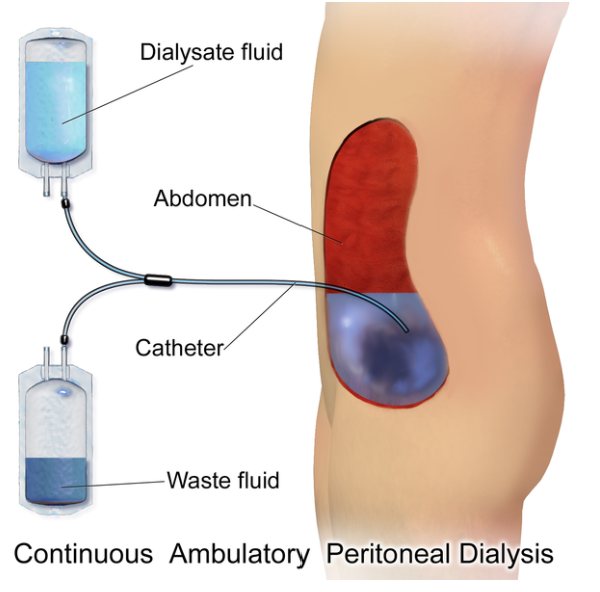
You, a relative, caregiver or visiting technician will drain out the old dialysis fluid and replace it with fresh fluid using your catheter (see picture).

Diagram showing peritoneal dialysis. An empty bag connected to the catheter is used to drain fluid out the abdomen. A bag of fresh fluid is connected to a catheter to refill the abdomen.

There are two ways of refreshing dialysis fluid:

  • Automated peritoneal dialysis: You’ll use a machine to automatically swap the fluids during the night while you sleep.
  • Continuous ambulatory peritoneal dialysis: You, a relative, caregiver or technician will do a fluid swap about 4 times a day. It takes about 30–45 minutes each time.

Experts think these two types of peritoneal dialysis work equally well, although there’s not been much research comparing them. Automated peritoneal dialysis is the more common choice.

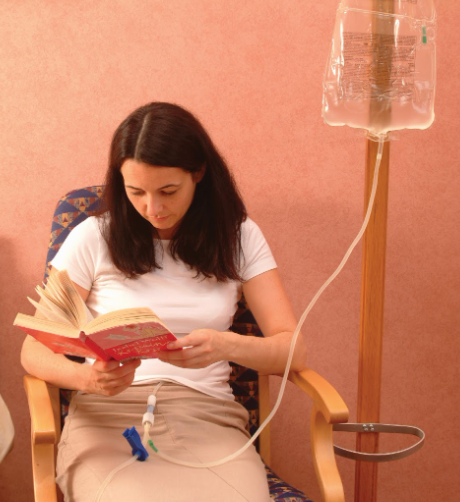
A photo of a woman sat in a chair reading a book while doing a dialysis fluid swap. A bag of fluid hangs from a stand. A tube from the bag connects to her peritoneal catheter, unseen under her t-shirt.

Your dialysis team will be on hand for advice and care when you need.

Side effects and risks

Peritoneal dialysis can make you feel tired and sick. It can also lead to low blood pressure that can make you feel dizzy or lightheaded. Some people find it uncomfortable to have a peritoneal catheter, to have fluid in their abdomen or to do the fluid swaps.

Let your nursing team know if you get any of these problems as changes to your dialysis schedule or the fluid ingredients can help.

You’ll probably need to take laxatives daily to prevent constipation (difficulty pooing). This is because constipation can move or squash your catheter, stopping it working well. Laxatives make your poo softer and you might need the toilet more urgently.

If you have peritoneal dialysis, there’s a risk of:

  • getting an infection around your catheter or in your peritoneum (known as peritonitis)
  • getting a hernia, meaning part of your bowel bulges through your tummy muscles under the skin
  • the catheter becoming blocked, not draining well or leaking
  • changes to your peritoneum that require treatment

You’ll need to keep your catheter clean to reduce the chance of infection. Your dialysis team will explain the signs of infection to look out for. If you have diverticular disease and use peritoneal dialysis, you might be more likely to get peritonitis.

If you get an infection, you’ll need antibiotics either at home or in hospital. If the infection doesn’t clear, you might need a procedure to adjust or replace parts of your catheter. A nurse can do this for you. You might need to have haemodialysis until the infection clears.

If you get a hernia, you may need surgery to correct this.

If your catheter becomes blocked, a nurse can usually unblock it for you. If it keeps leaking, a radiologist can use scans to see why. Some leaks get better on their own — you might need to swap to haemodialysis while it settles. If the leak continues, your catheter might need adjusting or replacing.

Some people having peritoneal dialysis get a thicker or harder peritoneum covered in calcium. This is called encapsulating peritoneal sclerosis and can make you unwell. You’re likely to need nutritional supplements by mouth or into a vein until you’re well enough to eat again.

Encapsulating peritoneal sclerosis can be hard to treat so you may need to switch to having haemodialysis.

Monitoring

You’ll have regular monitoring (usually at least every 6 months) to check peritoneal dialysis is working well to clean your blood. You might need check-ups more often if your kidney function is very low. You’ll also have check-ups of your peritoneum.

Check-ups are a chance for you and your dialysis team to review any side effects and discuss how dialysis is impacting your life. They might be able to suggest changes, treatments or support to help.

You might be able to do some of these check-ups over the phone or on video call rather than visiting the clinic.

Travel

You can do your fluid swaps anywhere clean and light with a sink to wash your hands. You can go on holiday or overnight stays — just take enough supplies and follow your dialysis routine.

For more information, see Kidney Care UK’s guide Dialysis Away From Base. You can get help organizing dialysis away from home through their free service called Dialysis Freedom.

More from the PKD Charity

Information and support from others

Further information

All of our publications are based on references but these are removed for ease of reading on our webpages. A version of this webpage with references included is available upon request by emailing [email protected].

Authors and contributors

Written by Hannah Bridges, PhD, Independent Medical Writer at HB Health Comms Limited. Expert review by Matthew Gittus, PhD Fellow,
Sheffield Kidney Institute, University of Sheffield.

With thanks to all those affected by ADPKD who contributed to this publication.

Ref No: ADPKD.PD.V1.0
© PKD Charity 2025
First published: June 2025
Due to be medically reviewed: June 2028

Disclaimer: This information is primarily for people in the UK. We have made every effort to ensure that the information we provide is correct and up to date. However, it is not a substitute for professional medical advice or a medical examination. We do not promote or recommend any treatment. We do not accept liability for any errors or omissions. Medical information, the law and government regulations change rapidly, so always consult your GP, pharmacist or other medical professional if you have any concerns or before starting any new treatment.

If you don't have access to a printer and would like a printed version of this information sheet, or any other PKD Charity information, call the PKD Charity Helpline on 0300 111 1234 (weekdays, 9am–5pm) or email [email protected]

The PKD Charity Helpline offers confidential support and information to anyone affected by PKD, including family, friends, carers, newly diagnosed or those who have lived with the condition for many years.

Feedback

We welcome feedback on the information provided on this webpage. If you have any feedback regarding the information provided on this webpage, please complete the Feedback Form.

Read more …Peritoneal dialysis

  • Hits: 7901

Progression

Progression of ADPKD

This information is for people with autosomal dominant polycystic kidney disease (ADPKD), their families and friends. It explains how the disease reduces kidney health over a person’s lifetime. This is known as ‘progression’.

If you have ADPKD, your kidney function is likely to begin to fall in your 30s or 40s. If you’re younger, you might still find this factsheet useful in helping you to know what to expect later in life. 

Contents

What do healthy kidneys do?

Before looking at ADPKD progression, here’s a quick reminder of what healthy kidneys do for the body:

  • filter your blood to remove waste and extra fluid
  • balance levels of salts, minerals and acids in your blood
  • help to control your blood pressure
  • tell your body when it needs to make more red blood cells
  • activate vitamin D to help keep your muscles and bones healthy

What happens as ADPKD progresses?

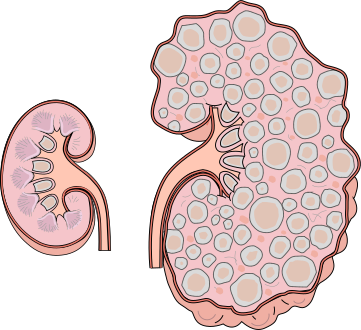
If you have ADPKD, the size and number of kidney cysts you have will gradually increase over the years.  This will make your kidneys grow bigger. The cysts will start to damage some of your healthy kidney tissue, which has less room.

While a normal kidney is about the size of a potato, the kidneys of people with ADPKD can become as large as a rugby ball. This is because of the large cysts within them.

Figure 1: Drawing of the inside of a polycystic kidney (right), showing cysts of different sizes, compared with a normal kidney (left).

Although damaged tissue can’t filter as much blood as normal, the healthy parts of your kidney will make up the work for many years.

At some point, there won’t be enough healthy tissue to do all the work your kidneys are meant to do. This is known as chronic kidney disease (CKD). Until your kidney function gets very low, you probably won’t have many symptoms.

If you get symptoms of poor kidney function, you may need to change your diet and take medications to help. We explain this later.

Many but not all people with ADPKD eventually get kidney failure. At this point, the kidneys are not doing the basic amount of work your body needs. This will make you unwell. If you get kidney failure, kidney replacement therapy — which can be dialysis or a kidney transplant — can replace some of the work of your kidneys and prolong your life.

You can choose not to have dialysis or a transplant if you prefer. It’s important to understand your life could be much shorter without these treatments. Most people who make this choice are in old age and have additional health problems.

How might I feel about my disease progressing

Some people with ADPKD find that not knowing when their kidney function will decline makes them anxious.

Other challenging or stressful times include:

  • finding out that your kidney function has got worse
  • waiting for a donor kidney to become available for transplant

However, with regular kidney check-ups, you should know well in advance that your kidney health is decreasing and be able to start planning with your doctor.

As time goes on, many people with ADPKD say they better adapt to living with the condition and feel more positive.

Some people with ADPKD find their enlarged abdomen affects their body image or self-esteem. ADPKD can also affect relationships and sex life.

If ADPKD is affecting your emotions, mental health, body image, self-esteem or sex life, chat to your doctor about what support is available.

For more information and support, see living well with ADPKD and support.

Will I develop kidney failure, and when?

Understandably, many people with ADPKD worry about if and when they’ll develop CKD and kidney failure.

Not everyone gets kidney failure and so not everyone needs dialysis or a transplant. The age that kidney failure happens can vary from person to person (and even within the same family).

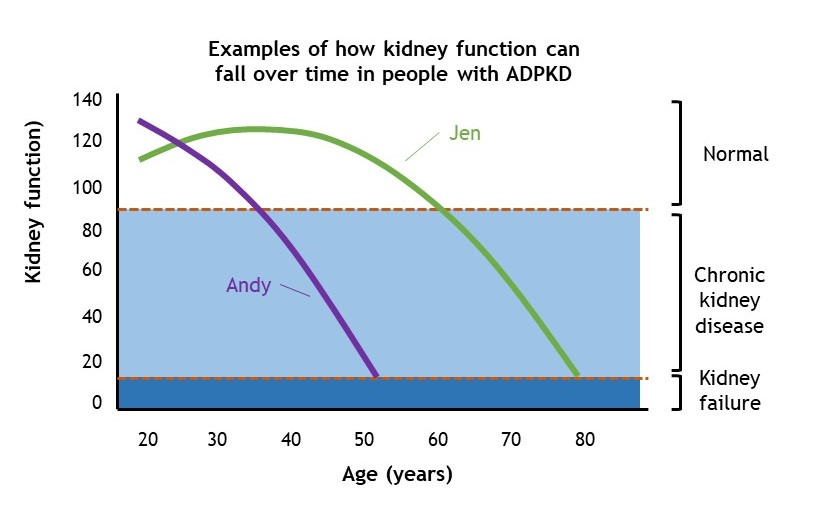
We show this in the graph below. Andy will need to have dialysis or a transplant about age 50, while this happens in Jen’s late 70s.

Figure 2: Two examples of how ADPKD can progress over a person’s lifetime.

About half of all people with ADPKD get kidney failure by the time they turn 60. Yet, a quarter of people with ADPKD reach age 70 without their kidneys failing.

You’re more likely to have slowly progressing ADPKD if:

  • you have a PKD2 gene alteration (rather than PKD1 gene alteration)
  • you’re female (female hormones might protect the kidneys a little)
  • your kidneys are not too enlarged

Your doctor can’t predict for sure if and when you’ll get kidney failure. However, they can track your kidney function in check-ups using urine and blood tests. Checking the size of your kidneys using scans might help to predict progression too. These predictions can be wrong for some people.

If anxiety about your kidney function is affecting your life, ask your GP or kidney specialist to refer you for support.

Tests to monitor ADPKD progression

Measuring kidney function

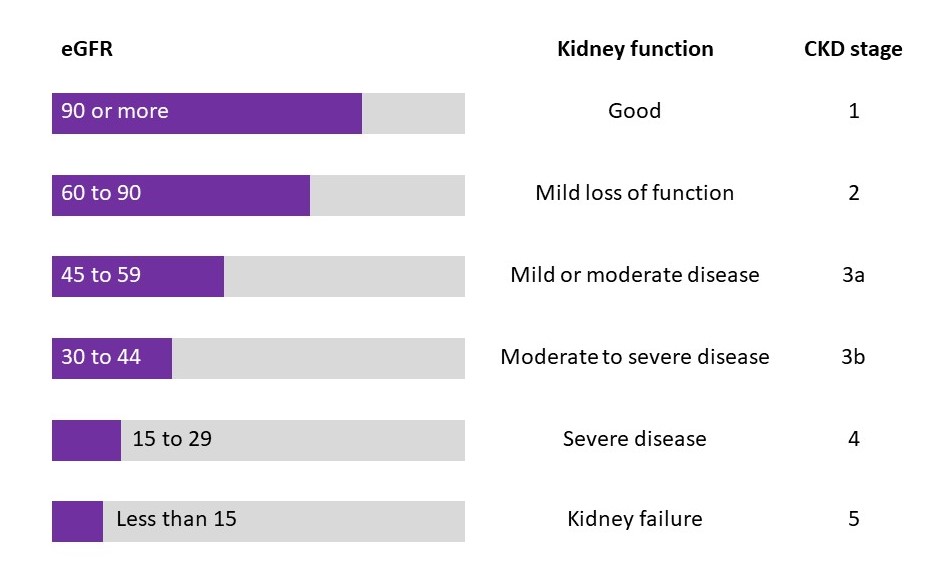
Kidney function is usually measured by estimating how much blood your kidneys can filter in a minute. This is known as the estimated glomerular filtration rate, or eGFR [KRUK Tests]. eGFR is measured in millilitres of blood filtered in 1 minute per 1.73 m2 of your body size [KRUK Tests]. This is written as ml/min/1.73 m2.

Your eGFR gives a rough idea of how well your kidneys are working (see Figure 3).

Figure 3: Understanding what your eGFR result means.

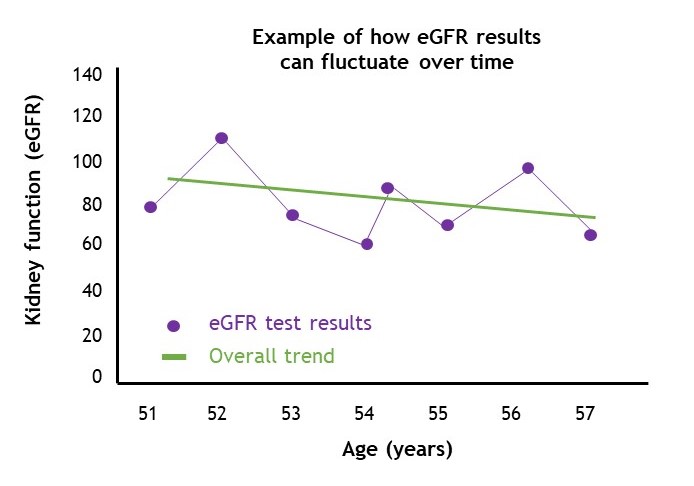
It’s important to understand that eGFR is only an estimate and the results can waver, especially if your kidney function is quite good. The test results can be affected by many things, such as time of day, your diet, medications, hard exercise and the methods the hospital lab uses.  Don’t read too much into one unusual reading before talking with your kidney specialist.

If your eGFR result is much lower than usual, your kidney specialist will repeat the test a few times. This is to work out if your kidney function is truly dropping or if the estimate was low.

When monitoring your kidney health, your kidney specialist will be looking at the overall trend over a few years.

Here is an example of how eGFR readings can waver over time, and the overall trend your doctor will be looking for:

Figure 4: Example of how eGFR can waver over time.

Checking for kidney damage

A simple urine test called an albumin:creatinine ratio, or ACR, can check for signs that your kidneys are damaged. This test looks to see whether there is a protein called albumin in your urine. Having more albumin than usual in your urine is a sign of kidney damage. An ACR of 3 mg/mmol or lower suggests mild damage, while an ACR of 30 mg/mmol or higher suggests severe damage.

Measuring kidney size

Your doctor will estimate the size of your kidneys when you’re diagnosed with ADPKD. This is done using imaging scans and is called ‘total kidney volume’, or TKV.

Healthy men have a total kidney volume of roughly 300–430 ml while for women it is 220–330 ml. As ADPKD progresses, your kidneys become larger as the cysts within them grow.

On average, the kidneys of a person with ADPKD will grow by 5% or 6% each year. For example, if a person’s total kidney volume is 1000 ml this year, it may be 1060 ml next year.

The amount the kidneys grow each year differs from person to person.

Because blood tests can check kidney health, some experts recommend that people with ADPKD don’t need regular scans to estimate TKV, unless they have symptoms.

Scans to estimate your TKV can be useful to see whether a treatment for ADPKD called tolvaptan (brand name Jinarc®) is suitable for you. TKV might also be used to see whether a clinical trial is an option for you.

What is chronic kidney disease?

If your kidneys show signs of ongoing damage or a drop in function, you will be diagnosed with ‘chronic kidney disease’ (CKD). ‘Chronic’ means the disease continues for 3 months or more. However, a chronic disease is not always serious.

CKD can be mild, moderate, or severe. It depends on your kidney function (your eGFR) and signs of kidney damage (your ACR). We explained these tests earlier.

Having mild CKD (stage 2) means your kidneys are functioning quite well but may show some damage. If your CKD is moderate or severe (stage 3 or 4), this means your kidney function is reduced quite a lot and your kidneys are damaged. The most serious stage of CKD is stage 5, which is also called ‘end stage kidney disease’. At this stage, your kidneys are failing. Dialysis or a kidney transplant to replace their function and prolong your life.

What are the symptoms of poor kidney function?

If you have mild or moderate CKD, you probably won’t have symptoms associated with reduced kidney function. If your CKD worsens, you’re likely to start feeling less well.

People with severe CKD or kidney failure are especially likely to get:

  • tiredness and lack of energy
  • dry skin
  • difficulty sleeping
  • feeling sick
  • poor appetite, which may cause weight loss
  • less interest in sex, and finding it harder to get sexually aroused
  • bone or joint pain
  • muscle cramps, itchiness and restless legs
  • swollen ankles, feet or hands (due to fluid retention)
  • feeling dizzy or light-headed
  • finding it hard to concentrate
  • feeling sad, irritable or anxious
  • headaches
  • shortness of breath

What other problems can ADPKD cause as it progresses?

As your kidney cysts grow, you’re more likely to get other problems linked to ADPKD. These include:

How often will my kidneys be checked?

You should have a kidney check-up at least once a year. How often you have check-ups will depend on how much ADPKD is affecting your kidneys and your preference. People with poorer kidney function usually see their kidney specialist more often than those with better kidney function.

If your kidney function is currently good, you’ll probably only need a check-up once a year. If you have severe CKD, you’re likely to have a check-up every few months.

How is reduced kidney function treated?

If you have mild or moderate CKD, you may not need any treatment. There are some things you can do to keep healthy, which we explain in the next section.

If your kidney function drops further and you start getting symptoms, you may need to:

  • make changes to your diet
  • follow your doctor’s advice about the amount of liquid you drink
  • take medicines to help keep you healthy

If doctors think your kidneys will fail in the next year or two, they’ll chat to you about your preferences for dialysis, a transplant or neither.

How can I protect my kidneys from damage?

There’s no cure for ADPKD. You can slow the progression of your ADPKD and protect your kidneys by taking these 3 steps:

  1. Follow your doctor’s advice to control your blood pressure if it’s high.
  2. Follow our tips on diet and lifestyle.
  3. Avoid medicines that may harm your kidneys.

If you have mild to moderate CKD and your ADPKD is progressing rapidly, you may be eligible for a treatment called tolvaptan (Jinarc®). In trials, tolvaptan slowed the speed at which some people’s kidneys grew and also slowed their kidney damage.

You can find out more about tolvaptan in our fact sheet on treatments for ADPKD.

More information from the PKD Charity

Authors and contributors


Written by Hannah Bridges, PhD, Independent Medical Writer at HB Health Comms Limited. Reviewed by Dr Matthew Gittus, Academic Clinical Fellow, Renal Medicine, Northern General Hospital, Sheffield.

With thanks to all those affected by ADPKD who contributed to this publication.

Ref No: ADPKD.P.v2.0
Last updated: July 2023
Next scheduled review: July 2026


Disclaimer:  This information is primarily for people in the UK. We have made every effort to ensure that the information we provide is correct and up to date. However, it is not a substitute for professional medical advice or a medical examination. We do not promote or recommend any treatment. We do not accept liability for any errors or omissions. Medical information, the law and government regulations change rapidly, so always consult your GP, pharmacist or other medical professional if you have any concerns or before starting any new treatment.

We welcome feedback on all our health information. If you would like to give feedback about this information, please email [email protected]

If you don't have access to a printer and would like a printed version of this information sheet, or any other PKD Charity information, call the PKD Charity Helpline on 0300 111 1234 (weekdays, 9am-5pm) or email [email protected]

The PKD Charity Helpline offers confidential support and information to anyone affected by PKD, including family, friends, carers, newly diagnosed or those who have lived with the condition for many years.

Read more …Progression

  • Hits: 165097

Diverticula

Diverticula

This information is for people with autosomal dominant polycystic kidney disease (ADPKD), their families and friends. It explains problems caused by bulges in the bowel lining, called diverticula. Most people probably don’t have diverticula, but they’re more likely to occur in people with ADPKD than the general population.

Contents

Key facts

  • Diverticula are bulges or pouches in the lining of the colon (large bowel).
  • People with ADPKD might be twice as likely to get diverticula than the general population, but we are not certain.
  • Most people with diverticula don’t get any symptoms.
  • However, 1 in 5 people with diverticula can get pain, bloating, constipation or diarrhoea. Less commonly, diverticula can get infected or bleed.
  • A healthy balanced diet containing lots of fibre can lower your risk of getting symptoms and complications from diverticula.
  • Medicines used to treat symptoms include paracetamol for pain, laxatives for constipation, and antibiotics for an infection.

What are diverticula?

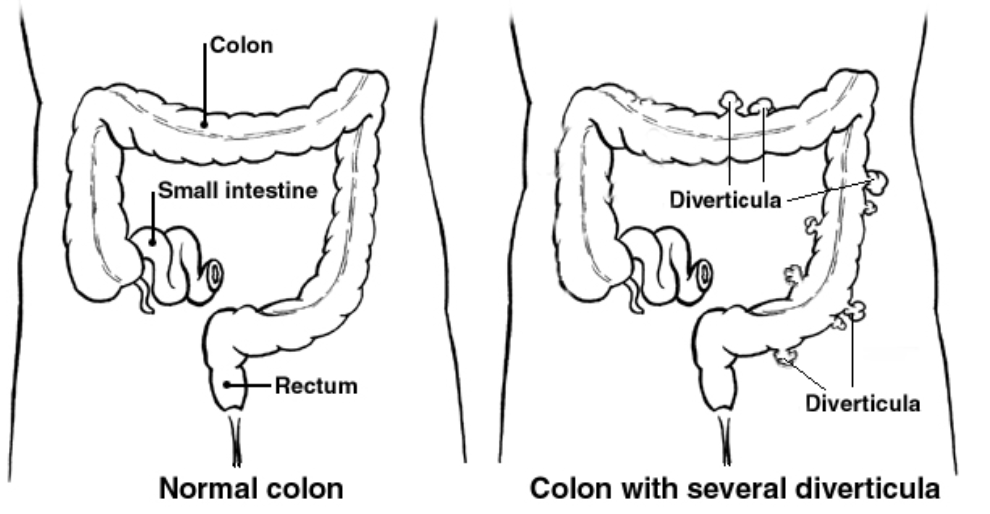
As people age, some develop bulges or pouches in the lining of their colon (the large bowel). These dead ends in the bowel are called diverticula (see picture).

Picture showing a normal colon versus a colon with diverticula. The normal colon is a long worm-like tube running from the small intestine to the anus in a question mark shape. The sides are largely smooth. In comparison, the colon with diverticula has some bulges or pouches coming from it. These are small dead ends.

Most people with diverticula don’t get any symptoms. However, sometimes people can get symptoms and, less commonly, diverticula can get infected or bleed.

Other terms you might hear are:

  • diverticulosis: diverticula that aren’t causing symptoms
  • diverticular disease: diverticula causing symptoms
  • diverticulitis: infected and inflamed diverticula

How common are diverticula in people with ADPKD?

Most people with ADPKD probably don’t have diverticula. However, people with ADPKD could be twice as likely to get diverticula than the general population. We are not sure of the exact risk because there has not been much research on this.

In a large American study, about 4 in every 100 people with ADPKD had been diagnosed with diverticula previously. This compared with about 2 in every 100 people in the general population.

The true number of people with diverticula may be much higher than this study found. This is because diverticula don’t usually cause symptoms. So, many people probably have them without ever knowing.

Some experts think as many as half the population could have diverticula by the time they’re 50 years old.

Your chance of having diverticula increases with age and when you have reached kidney failure.

If you have questions or concerns about your risk of diverticula, chat to your GP or kidney specialist.

Symptoms

Usually, diverticula don’t cause symptoms. However, in about 1 in 5 people, diverticula can cause symptoms such as:

  • abdominal pain (usually on the left side)
  • feeling bloated
  • constipation
  • diarrhoea
  • blood in your poo

If a diverticulum gets infected (called diverticulitis) it can cause:

  • severe abdominal pain
  • a high temperature (38°C or higher)
  • blood and mucus (slime) in your poo

If you get symptoms of infected diverticula, see your doctor urgently or contact the NHS for advice on 111.

Diagnosis

You’ll only be tested for diverticular disease if you have symptoms. Screening is not routine in the general population or for people with ADPKD. If you have tests for other bowel problems, these may spot diverticula.

If you have symptoms such as bloating, constipation or diarrhoea, your doctor (GP) might refer you for tests to find the cause.

Tests for diverticula include:

  • a blood test
  • a test on a poo sample
  • a colonoscopy or flexible sigmoidoscopy, for which a doctor will put a thin tube containing a camera through your anus into your bowel
  • a computed tomography (CT) scan, which uses X-rays to make images of the inside of your body

Complications

Problems linked to diverticula can include:

  • an infection (called diverticulitis)
  • an abscess (collection of pus) in the abdomen
  • bleeding from the bowel
  • a hole in your bowel wall

In a study, 1 in 5 people with ADPKD who had received a kidney transplant got an infected diverticulum (diverticulitis) within 12 years.

If you have high blood pressure or constipation, this may increase your risk of getting problems linked to diverticula.

If you get any of the symptoms we listed earlier, see your GP.

Treatment

There is no cure for diverticula. Changes to diet and medicines can help to prevent and manage symptoms.

Management of diverticula without symptoms

If you have diverticula but no symptoms (known as diverticulosis), you won’t need any treatment.

A healthy balanced diet containing lots of fibre can lower your risk of getting symptoms and complications. Foods high in fibre include whole grains, fruit and vegetables. You can find out more about a high-fibre diet at NHS Inform.

Treatment of diverticular disease

Diet

If you have diverticula that are causing symptoms (known as diverticular disease), your doctor may recommend a diet high in fibre. We explain this above.

Pain

If your diverticula are causing pain, your doctor will recommend painkillers, such as paracetamol.

Don’t take non-steroidal anti-inflammatory drugs such as ibuprofen (Nurofen®) unless your doctor says this is okay. These drugs can harm the kidneys of people with ADPKD. They may also increase your risk of getting bleeding diverticula or a hole in your bowel wall.

Constipation

If you have constipation, your doctor or pharmacist can recommend laxatives for you. The type of laxative that can help is a ‘bulk-forming laxative’. Examples are ispaghula husk, methylcellulose and sterculia.

Bleeding

Occasionally, diverticula can bleed due to a blood vessel bursting. This is usually painless but can cause a lot of blood loss.

If you have small amounts of blood when you poo, see your GP.

If you have a lot of blood coming out your bowel, get medical care urgently. Go to accident and emergency (A & E) or call 111 for advice.

If you have a big bleed, doctors in the hospital can assess how much blood you’re losing and give you a blood transfusion if needed. The bleeding usually stops on its own, but some people need surgery.

Treatment of diverticulitis

If you have signs of an infected diverticulum (called diverticulitis) and are unwell, your doctor will prescribe you antibiotics. They’ll explain the signs of the infection worsening to look out for and when to contact them. 

You might need to stay in hospital if you have a bad infection, can’t take oral antibiotics, or are in poorer health. 

Usually, diverticulitis gets better with antibiotics. However, if the infection spreads or causes an abscess, you might need surgery. 

Why are people with ADPKD more likely to get diverticula?

We don’t know why diverticula are more common in people with ADPKD, especially those with kidney failure.

One suggestion is that the gene alterations that cause ADPKD may also weaken the muscle in the bowel wall. Another idea is that the ‘glue’ that holds cells together (the extracellular matrix) is abnormal in the bowel of people with ADPKD.

Can people with diverticula have peritoneal dialysis?

If you’re due to start dialysis, you and your kidney specialist will talk through the best options. The main two types of dialysis are:

  • haemodialysis, for which a machine filters your blood
  • peritoneal dialysis, where you put fluid in your abdomen

You can learn about dialysis on our website.

Having diverticula doesn’t usually stop you being able to have peritoneal dialysis. However, if you keep getting infected diverticula, haemodialysis might be a better option for you. This is because there is a risk that an infection in a diverticulum could spread into the area of the abdomen being used for peritoneal dialysis. This is just one factor your specialist will help you to consider, among many others.

More from the PKD Charity

Information and support from others

The Bladder and Bowel Community provides support to people with bladder and bowel conditions (email: [email protected]).

Further information

All of our publications are based on references but these are removed for ease of reading on our webpages. A version of this webpage with references included is available upon request by emailing [email protected]

Authors and contributors

PIF

Written by Hannah Bridges, PhD, independent medical writer, HB Health Comms Limited. Reviewed by Dr Lukas Foggensteiner, Consultant Nephrologist, NHS University Hospitals Birmingham.

With thanks to all those affected by PKD who contributed to this publication.

Ref No: ADPKD.DIV.V3.0
Latest version: © PKD Charity May 2025
Due to be medically reviewed: May 2028

Disclaimer: This information is primarily for people in the UK. We have made every effort to ensure that the information we provide is correct and up to date. However, it is not a substitute for professional medical advice or a medical examination. We do not promote or recommend any treatment. We do not accept liability for any errors or omissions. Medical information, the law and government regulations change rapidly, so always consult your GP, pharmacist or other medical professional if you have any concerns or before starting any new treatment.

If you don't have access to a printer and would like a printed version of this information sheet, or any other PKD Charity information, call the PKD Charity Helpline on 0300 111 1234 (weekdays, 9am–5pm) or email [email protected]

The PKD Charity Helpline offers confidential support and information to anyone affected by PKD, including family, friends, carers, newly diagnosed or those who have lived with the condition for many years.

Read more …Diverticula

  • Hits: 61106

Kidney stones

Kidney Stones in ADPKD

This information is for people with autosomal dominant polycystic kidney disease (ADPKD), their families and friends. Kidney stones are common in people with ADPKD. Learn here about causes, symptoms, diagnosis, treatment and prevention.

Contents

Key Facts

  • Kidney stones are formed when crystals of salts and minerals group together in the urine.
  • They are also called ‘renal calculi’ or ‘nephrolithiasis’.
  • They can range from the size of gravel to a small pebble.
  • Sometimes they travel from a kidney to the ureter (tube to the bladder) or bladder.
  • Kidney stones are common in people with ADPKD but often don’t cause symptoms.
  • Larger stones may cause severe pain, blood in your wee, or a blockage making it hard to wee.
  • Treatment of kidney stones depends on their size and position.
  • Small stones (less than 6—7 mm) can often be passed when you wee without causing problems or much discomfort.
  • You may need a procedure to break up a large stone so that you can pass it, or have surgery to remove it.
  • Steps to reduce your risk of kidney stones include staying hydrated, limiting salt, and eating a normal amount of calcium.

How common are kidney stones in people with ADPKD?

Kidney stones are more common in people with ADPKD than the general population.

By middle age, roughly 1 in every 10 people with ADPKD have had at least one kidney stone that has caused symptoms. A further 2 in every 10 people with ADPKD have kidney stones that don’t cause any symptoms. These can show up on scans, such as computed tomography (CT).

You might be more likely to get kidney stones as you get older and your ADPKD progresses.

Causes of kidney stones

Kidney stones are formed when crystals of substances found in urine, such as calcium and uric acid, group together. People with ADPKD might be more likely to get kidney stones because:

  • Urine flows more slowly through the kidney, meaning that crystals causing kidney stones have more time to form and group.
  • People with ADPKD can have different urine content:
    • higher levels of stone-forming salts and minerals (oxalate and urea)
    • more acidic urine
    • lower levels of substances that help to stop stones forming (citrate and ammonia)

Symptoms of kidney stones

Kidney stones often cause no symptoms and might be spotted on a scan you have for other reasons. Stones can cause symptoms including severe pain, particularly when they move.

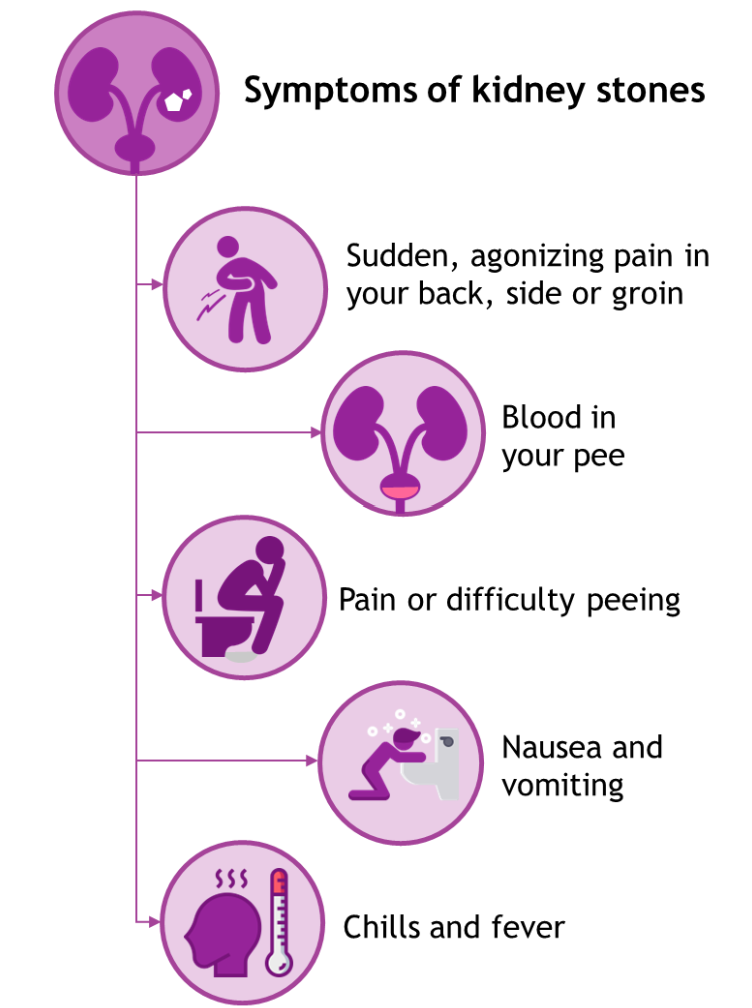
You may experience:

  • sudden, agonizing pain in your back, side or groin (renal colic)
  • blood in your wee
  • pain or difficulty weeing
  • nausea and vomiting
  • chills and fever

You might experience some of these symptoms for other reasons too, such as a cyst infection.

Picture showing the symptoms of kidney stones (as listed in the text above).

Diagnosing kidney stones

Your doctor will examine you and perform some simple tests. These help to work out whether you have a kidney stone or another problem (such as an infected cyst).

These tests usually include:

  • blood tests to check levels of blood cells, your kidney function, and levels of substances that can cause kidney stones
  • urine tests to check for blood in your wee and signs of infection

If your doctor thinks you have a kidney stone, they’ll refer you to a specialist. This should happen within 24 hours if you have severe kidney pain. Alternatively, your doctor may suggest you visit accident and emergency (A + E).

To locate the stone and check its size, you’ll need a scan of your kidneys and bladder, such as a CT scan. A CT machine uses X-rays to develop an image of the inside of your body. You might be given a dye (called contrast medium) before your CT scan to help see any kidney stones. This can be given as a drink or an injection.

Sometimes, other scans may be used, such as:

  • ultrasound, which uses soundwaves to see inside the body
  • intravenous urography (pyelography), for which you have a dye injected into your bloodstream followed by an X-ray

Pregnant women usually have an ultrasound rather than a CT scan or intravenous urography.

Treating kidney stones

Passing small stones in your wee

You might be able to wee out small stones (up to 6—7 mm). Most kidney stones pass in 1—3 weeks at home. During this time, you should increase your fluid intake and may need some treatment including:

  • painkillers (check with your doctor before using non-steroidal anti-inflammatory drug such as ibuprofen or Nurofen®)
  • potassium citrate to try to dissolve the stone or stop it growing
  • drugs to make it easier to pass small stones when you wee (known as alpha blockers)
  • rehydration drinks
  • drugs to stop nausea and vomiting

It’s helpful for doctors to have the kidney stone to test which salts and minerals it’s made of. They can then give you advice or medicine to reduce your chance of having another stone in the future. For this reason, your doctor will ask you to wee through a sieve or gauze to catch the stone and take it to your next clinic visit, if possible.

Procedures to break up larger stones

If your stone is large or you have not been able to wee it out, you may need a procedure to break it up or remove it. This is usually done by a urologist (a doctor specializing in the urinary system) rather than your nephrologist (kidney specialist).

Common procedures are:

  • Shattering the stone with a special machine that delivers shockwaves from outside the body (extracorporeal shockwave lithotripsy). This breaks up the stone into small pieces you can wee out. This technique is commonly used for stones less than 1 cm in size.
  • Using a thin, tube-like camera (a ureteroscope) that is guided through your urethra, bladder and up a ureter (tube to a kidney) to view the stone. A laser is then used to break the stone into smaller pieces (called laser lithotripsy). This is usually done under general anaesthetic. This technique is often used when stones are 1—2 cm in size.
  • ‘Keyhole’ surgery to remove the stone (percutaneous nephrolithotomy). This is done under general anaesthetic through a small cut in the skin.

You should be offered one of these procedures within 48 hours if your pain is ongoing and intolerable, or if the stone is too big to pass naturally.

These procedures generally work well, solving the problem in about 9 out of 10 patients. Lithotripsy sometimes takes more than one session.

The procedures are usually straightforward, but some complications can occur, such as an infection. Ask your doctor to explain the benefits and risks to you, and to outline the different procedures that may be suitable for you. This will help you to make decisions about your treatment.

If you have a large stone and other procedures don’t work, you might need open surgery. This involves a larger cut to access your kidney and is done under general anaesthetic. Very few people need this type of surgery for kidney stones.

Preventing kidney stones

You can reduce your risk of getting kidney stones by:

  • drinking plenty of fluid to avoid dehydration
  • avoiding fizzy drinks
  • adding fresh lemon juice to drinking water
  • eating less salt (no more than 5 g a day)
  • eating a normal amount of calcium (so, having a healthy diet but not using calcium supplements)

      See our diet and lifestyle factsheet for more advice on diet.

      If tests show your kidney stones are caused by a particular salt or mineral, your doctor may recommend that you avoid certain foods. They might also prescribe supplements or medicines to correct imbalances in your wee.

      If you’re taking tolvaptan to slow the progression of your ADPKD, this might also reduce your chance of getting kidney stones. Tolvaptan is not a treatment for kidney stones. However, in a trial of the drug for ADPKD treatment, researchers found that people taking tolvaptan had kidney stones less often than usual. This might be because tolvaptan makes you wee more and reduces the levels of salts and minerals that can cause kidney stones.

      Learn more from the PKD Charity

      More information from others

      Further Information

      All of our publications are based on references but these are removed for ease of reading on our webpages. A version of this webpage with references included is available upon request by emailing [email protected]

      Authors and contributors

      Written by Hannah Bridges, Independent Medical Writer, HB Health Comms Limited. Expert review by Dr Mattew Gittus, University of Sheffield, UK.

      With thanks to all those affected by ADPKD who contributed to this publication.

      Ref No: ADPKD.KS.V3.0
      Last updated: December 2024
      Next scheduled review: December 2027

      Disclaimer: This information is primarily for people in the UK. We have made every effort to ensure that the information we provide is correct and up to date. However, it is not a substitute for professional medical advice or a medical examination. We do not promote or recommend any treatment. We do not accept liability for any errors or omissions. Medical information, the law and government regulations change rapidly, so always consult your GP, pharmacist or other medical professional if you have any concerns or before starting any new treatment.

      If you don't have access to a printer and would like a printed version of this information sheet, or any other PKD Charity information, call the PKD Charity Helpline on 0300 111 1234 (weekdays, 9am–5pm) or email [email protected]

      The PKD Charity Helpline offers confidential support and information to anyone affected by PKD, including family, friends, carers, newly diagnosed or those who have lived with the condition for many years.

      Read more …Kidney stones

      • Hits: 22443

      Blood in your wee

      Blood in your wee

      This information is for people with autosomal dominant polycystic kidney disease (ADPKD), their families and friends. It explains why people with ADPKD can get blood in their wee, how the cause is found and how it’s treated.

      Seeing blood in your wee can be alarming. However, a little blood in wee (making it pink, red or brown) is common in people with ADPKD. If it continues for more than a few days or you have a lot of blood in your wee, contact your GP or kidney specialist.

      Contents

      How common is blood in wee?

      Wee (urine) doesn’t usually contain blood. However, it’s a common symptom in people with ADPKD. About 6 out of every 10 people with ADPKD get visible blood in their wee at times. It’s most common in people with large kidneys or who have kidney cysts with hard walls.

      The medical term for blood in wee is haematuria.

      Why do I have blood in my wee?

      In people with ADPKD, blood in wee is most often explained by kidney changes caused by the disease.

      The source of the blood can be:

      • a kidney cyst that has burst and is bleeding
      • sport or strenuous activity (the kidneys of people with ADPKD are prone to bleeding after a knock)
      • urinary tract infection, which is more common in women
      • a cyst infection
      • kidney stone

      Blood in your wee could also be caused by a condition unrelated to your ADPKD. These include:

      • a non-cancerous problem with the prostate gland in men
      • a problem with your blood, making bleeding more likely
      • cancer (this is rarely the cause)

      What signs should I look out for?

      Blood in your wee can make it pink, red or brown. You might also see small lumps of blood (clots).

      If you have very small amounts of blood in your wee, this might not cause a visible colour change. This would only be picked up by tests.

      Some people also get fever or pain in their abdomen (tummy) or back.

      If you have a little blood in your wee and no other symptoms, drink plenty of fluids. Look out for other symptoms, such as pain and fever.

      See your doctor (GP or kidney specialist) if:

      • the bleeding continues
      • or you have other symptoms
      • or you’re losing a lot of blood in your wee

      Even if the problem goes away, tell your doctor — this helps them to look after your kidney health and to decide whether you need any tests.

      Is pink, red or brown wee always caused by blood?

      Other reasons your wee might be pink, red or brown are:

      • You have eaten a red food such as beetroot or red cabbage.
      • You have not drunk enough fluid and are dehydrated (making wee browner).
      • You take a medicine that alters wee colour (for example, rifampicin, metronidazole, nitrofurantoin or phenytoin).

      Women on their period might notice a colour change after weeing but this isn’t from the urinary tract.

      If you notice a change in your wee colour, consider whether the things above might explain it. If the colour change continues, tell your doctor.

      How do doctors test for blood in wee?

      A doctor can check your urine sample for blood by dipping a special strip of paper into it. This is called ‘dipstick urinalysis’. The strip will change colour if there is blood in your wee, even if the amount is very small.

      A urine test done at a routine check-up might also detect blood in your wee.

      If urine tests show that you have blood in your wee, your doctor may suggest further tests to find the cause. These will depend on the symptoms you have.

      For example:

      • If you might have a urinary tract infection, a lab can test your urine sample for signs of infection and microorganisms (germs).
      • If you have symptoms of a kidney stone or a burst or bleeding cyst, you’ll be referred for a kidney scan.
      • If you have a lot of bleeding, a doctor might examine your bladder using a procedure called cystoscopy.

      A cystoscopy involves a doctor putting a tube containing a small camera through your urethra into your bladder. You’ll have a general or spinal anaesthetic beforehand. You can learn more about cystoscopy on the NHS website.

      Scans used to check the kidneys include computed tomography (CT), magnetic resonance imaging (MRI) and ultrasound.

      How is blood in wee treated?

      Common treatments

      You can learn about treatments for urinary tract infections and kidney stones on our website.

      If the bleeding is from a cyst or a reason isn’t found, it can usually be treated at home by:

      • Drinking sufficient fluid. This will help to flush out any blood and reduce the risk of clots, which can be painful to wee out. Your doctor will explain the right amount to drink depending on your kidney function.
      • Resting in bed.
      • Taking pain killers. Your doctor will explain which ones are best for you.

      Don’t take non-steroidal anti-inflammatory drugs such as ibuprofen (Nurofen®) unless your doctor says this is okay. These drugs can harm the kidneys of people with ADPKD.

      Your doctor might also prescribe a medicine such as tranexamic acid to help stop the bleeding.

      If you usually take medicines that increase your bleeding risk (such as warfarin or other anticoagulants), your doctor may suggest stopping them until your bleeding lessens. Never stop taking medicines without consulting your doctor first — stopping anticoagulants can put you at risk of a blood clot.

      If other causes have been ruled out, blood in wee usually gets better in 2 to 7 days. If your bleeding continues, you may need further tests to find the cause.

      Treatment for severe bleeding

      Most people with blood in their wee lose only small amounts of blood. However, if you’re losing a lot of blood, you might need to stay in hospital to have a blood transfusion and intravenous fluid (a ‘drip’).

      You might need surgery to stop the bleeding, but this is rare.

      Procedures used to stop bleeding are:

      In transcatheter arterial embolization, the artery feeding the bleeding area of the kidney is blocked. For this procedure, you’ll have an anaesthetic. A surgeon will feed a fine tube into an artery in your groin and up to your kidney arteries.

      They’ll place a fine coiled wire into the artery going to the bleeding area. This stops the blood flow.

      You’re likely to get some pain and fever after transcatheter arterial embolization (which can be treated), and there is a risk of infection. Ask your surgeon to talk you through the benefits and risks.

      If your kidneys are causing a lot of problems, including bleeding, you may need to have one or both kidneys removed. This is called nephrectomy. We explain this surgery on our web page on kidney removal (nephrectomy).

      Just to repeat, the vast majority of people with blood in their wee don’t need surgery.

      How can I reduce the chance of getting blood in my wee?

      If certain activities tend to cause blood in your wee, you could avoid these. For example, strenuous exercise and contact sports sometimes trigger bleeding. Chat to your doctor about how risky your bleeding is and how important these activities are to you. This will help you to decide what’s best for you.

      You can also take steps to reduce your likelihood of urinary tract infections and kidney stones, as these sometimes cause bleeding. See our website for more information on these conditions.

      More from the PKD Charity

      Information from others

      Further information

      All of our publications are based on references but these are removed for ease of reading on our webpages. A version of this webpage with references included is available upon request by emailing [email protected]

      Authors and contributors

      Written by Hannah Bridges, PhD, independent medical writer, HB Health Comms Limited. Expert review by Dr Adam Rumjon, Consultant Nephrologist, King’s College Hospital NHS Foundation Trust.

      With thanks to all those affected by ADPKD who contributed to this publication.

      Ref: ADPKD.BIP.V2.0

      Latest version: © PKD Charity May 2025.

      Due for medical review: May 2028.

      Disclaimer: This information is primarily for people in the UK. We have made every effort to ensure that the information we provide is correct and up to date. However, it is not a substitute for professional medical advice or a medical examination. We do not promote or recommend any treatment. We do not accept liability for any errors or omissions. Medical information, the law and government regulations change rapidly, so always consult your GP, pharmacist or other medical professional if you have any concerns or before starting any new treatment.

      If you don't have access to a printer and would like a printed version of this information sheet, or any other PKD Charity information, call the PKD Charity Helpline on 0300 111 1234 (weekdays, 9am–5pm) or email [email protected]

      The PKD Charity Helpline offers confidential support and information to anyone affected by PKD, including family, friends, carers, newly diagnosed or those who have lived with the condition for many years.

      Read more …Blood in your wee

      • Hits: 46195

      Feedback

      We welcome feedback on the information provided on this webpage. If you have any feedback regarding the information provided on this webpage, please complete the Feedback Form